 Get it for my Mac (294 MB)
 VocalNet
1.0.4
- Version
- 1.0.5
- Developer
- VoosteQ
- Interface in
- English
- Licence on file
- K'ed by TEAM HCiSO
- macOS it runs on
- macOS 10.13 or later
- Chip support
- Apple Silicon, Intel 64-bit
In the edit
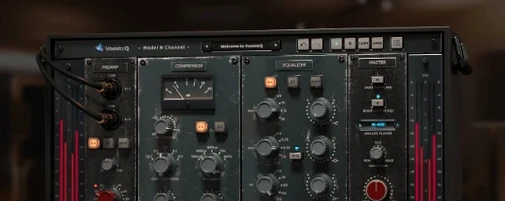
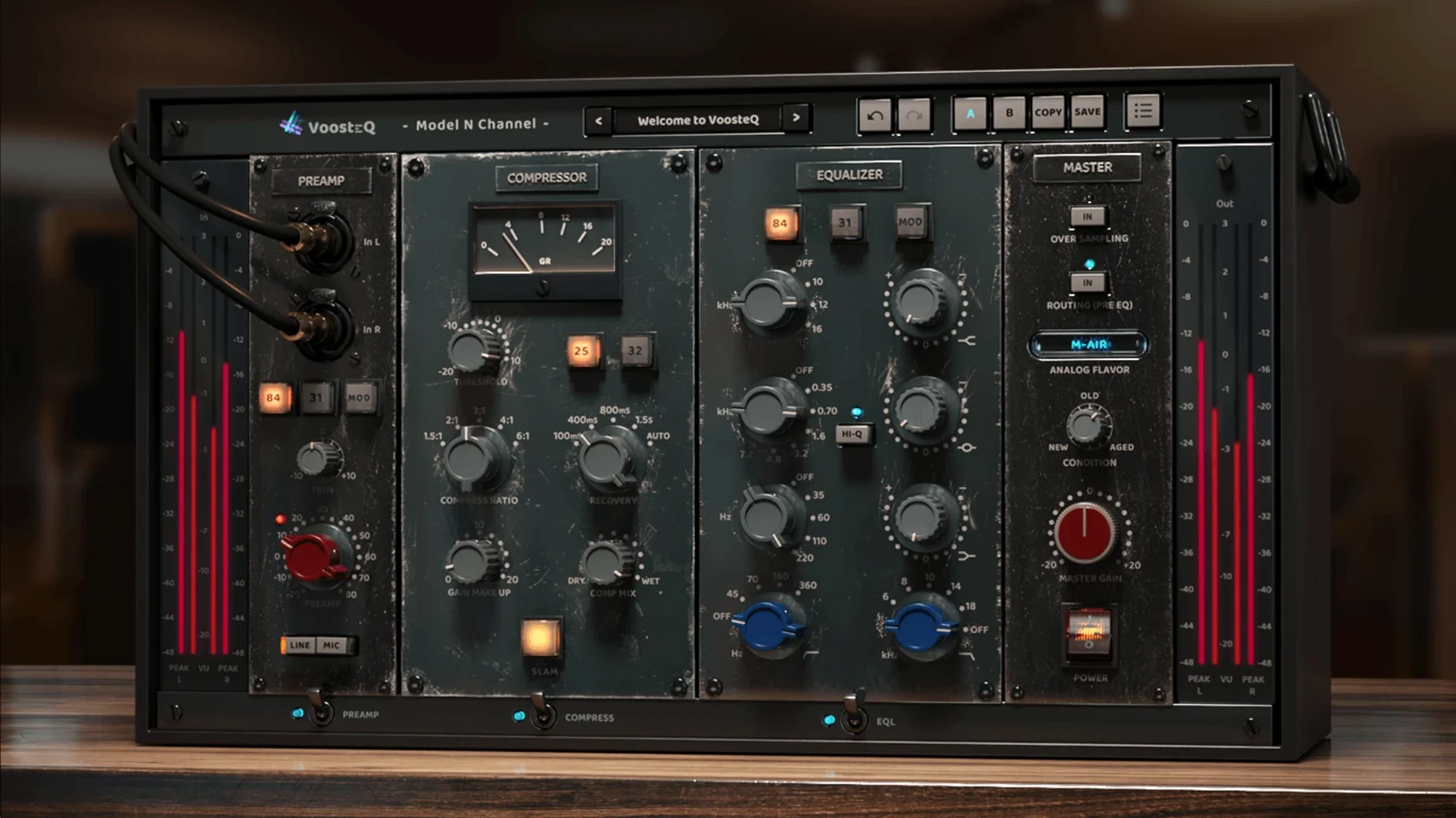
VoosteQ Model N Channel is for mix engineers and producers who want the sound of classic British console channels without the upkeep. It fits naturally on individual tracks — vocals, drums, guitars — and also works well on buses where a cohesive analog-style glue is needed.
Where does Model N Channel sit in a session?
On a track, the preamp section adds harmonic weight before the compressor catches peaks. The equaliser, with three filter types, can shape tone after compression or before it. On a bus, the transformer and analog flavour models can pull the whole mix together without heavy processing.
What does the compressor section do?
The compressor models British-style dynamics, from gentle levelling to more aggressive gain reduction. It works well on vocals and bass, but also on drum buses where a little pump is welcome.
How does the equaliser fit into the workflow?
Three EQ types give you flexibility: a classic British shelf, a parametric section, and a high-pass/low-pass pair. The low-pass bug at high sample rates was fixed in v1.0.7, so it's reliable at 192 kHz now.
Start a mix with a vocal or snare
I start a mix by loading Model N Channel on the first track that needs character — usually a vocal or a snare. The preamp section is where I begin: I pick one of the three preamp types and dial in a little gain, listening for the harmonic richness to thicken the sound without pushing it into distortion. Then I move to the compressor. With the two compressor types, I choose the slower one for vocals, setting a moderate ratio so the performance stays natural, and adjust the threshold until the meter shows a few dB of gain reduction on the louder phrases. The equaliser comes last. I use the parametric band to find any boxiness around 400 Hz and cut a couple of dB, then add a gentle high-shelf boost for air. The Analog Flavour switching lets me try different transformer and circuit models — sometimes the vintage setting adds a subtle saturation that makes the vocal sit better in the mix.
On the drum bus, the approach changes. I set the preamp to the more aggressive type and drive it harder, so the kick and snare get a cohesive crunch. The compressor, set to the faster type, catches the transients and gives the whole bus a pumping feel that works well for rock. The equaliser's high-pass filter cleans up the low end at around 60 Hz, and the low-pass filter tames the cymbal harshness. The Analog Flavour models, especially the transformer-heavy one, pull the drum sounds together as if they were recorded through a real console.
Perfect for rock, indie, soul, and electronic mixing
Mix engineers working in genres that rely on analog character — rock, indie, soul, electronic — will find Model N Channel a natural fit. It replaces the need for multiple separate plug-ins, so a single instance gives you preamp, compressor, equaliser, and transformer modelling in one window. That saves CPU and screen space, which matters on sessions with dozens of tracks.
Producers who record and mix on the same Mac also benefit. The preamp section can add weight to a DI guitar or a synth before the compressor shapes the dynamics, so you get a more finished sound earlier in the process. For Mac users running older systems — macOS 10.13 and later covers a wide range — the plug-in's 64-bit internal processing and support for both ARM and x86 architectures mean it works on Intel Macs and Apple Silicon machines alike.
Post-production engineers working on voiceovers or podcasts might use it more subtly: a small amount of preamp gain for presence, the compressor set to a gentle ratio, and the equaliser's high-pass filter to remove rumble. The Analog Flavour models add a polished, broadcast-ready tone without obvious processing.
Switch the preamp type for different harmonic character
When I open Model N Channel for the first time on a track, I adjust three things before anything else. First, the preamp type — the default is fine, but switching between the three models changes the harmonic character significantly. The vintage model adds warmth, the modern one is cleaner, and the modified one sits in between. Second, the Analog Flavour switch: cycling through the five circuit models while the track plays reveals which transformer or saturation style fits the source. Third, the compressor's attack and release times — the default settings work for general use, but matching them to the tempo of the song makes the compression feel musical rather than static.
After that, the equaliser's high-pass filter is worth setting early to clean up unnecessary low end before it hits the compressor. This reduces how much the compressor reacts to subsonic information and keeps the gain reduction more musical.
A workflow for shaping a vocal track from start to finish
Load Model N Channel on the vocal track. Start with the preamp section: choose the vintage preamp type and increase the gain until the vocal has a noticeable weight but no distortion. The goal is to add harmonic content that makes the vocal feel present without pushing it harsh.
Next, engage the compressor. Select the slower compressor type for a more transparent sound. Set the ratio to around 3:1, then lower the threshold until the meter shows 3–4 dB of gain reduction on the louder words. Adjust the attack to be medium-fast so the initial consonants pass through, and set the release to match the song's tempo — a faster release for uptempo tracks, slower for ballads.
Now the equaliser. Use the high-pass filter to cut everything below 80 Hz, removing any rumble or handling noise. Then use the parametric band to find the frequency range where the vocal sounds muddy — often around 300–500 Hz — and cut by 2–3 dB. Add a gentle high-shelf boost at 8 kHz to bring out air and presence. If the vocal sounds harsh, the low-pass filter can reduce some of the top-end sibilance.
Finally, experiment with the Analog Flavour models. Try the transformer-heavy model first — it adds a subtle low-end weight and high-end roll-off that can make the vocal feel more polished. Cycle through the five options and choose the one that sounds most natural in the context of the mix. The whole process takes a couple of minutes, and the result is a vocal that sits in the mix with character rather than needing multiple plug-ins to get there.
New this release
- Model N Channel v1.0.7 fixed a low-pass filter bug at high sample rates.
- v1.0.6 added support for macOS 26 Tahoe.
- v1.0.5 changelog is listed on the official support page.
Mac it needs
- macOS 10.13 or later
- 64-bit host application
- Intel or Apple Silicon processor
- Supports sample rates up to 192 kHz
Questions I actually get
Is Model N Channel compatible with Apple Silicon?
Yes, it supports Apple Silicon M1 and M2 Macs natively, alongside Intel-based systems.
What are the system requirements for macOS?
It runs on macOS 10.13 or later, supports 64-bit hosts, and handles sample rates up to 192 kHz.
What does the Analog Flavour switching do?
It toggles between transformer-like and analog-circuit-like character, letting you choose how much vintage colour the channel adds.
Installing on a Mac
- Mount the downloaded disk image.
- Run the standard installer.
- Choose your installation location to finish the setup.
Tip: If your host scans plug-in folders, restart it after installation so Model N Channel appears in your list.
Notes from photographers
Sign in or create your account to leave a comment.
No notes from photographers yet. If you have used this on a real folder, say which camera and which Mac.