 Get it for my Mac (170 MB)
 Revoice Pro
5.1.30
- Version
- 1.5.1
- Developer
- XLN Audio
- Interface in
- English
- Licence on file
- K'ed by TEAM HCiSO
- macOS it runs on
- macOS 10.13 or later
- Chip support
- Apple Silicon, Intel 64-bit
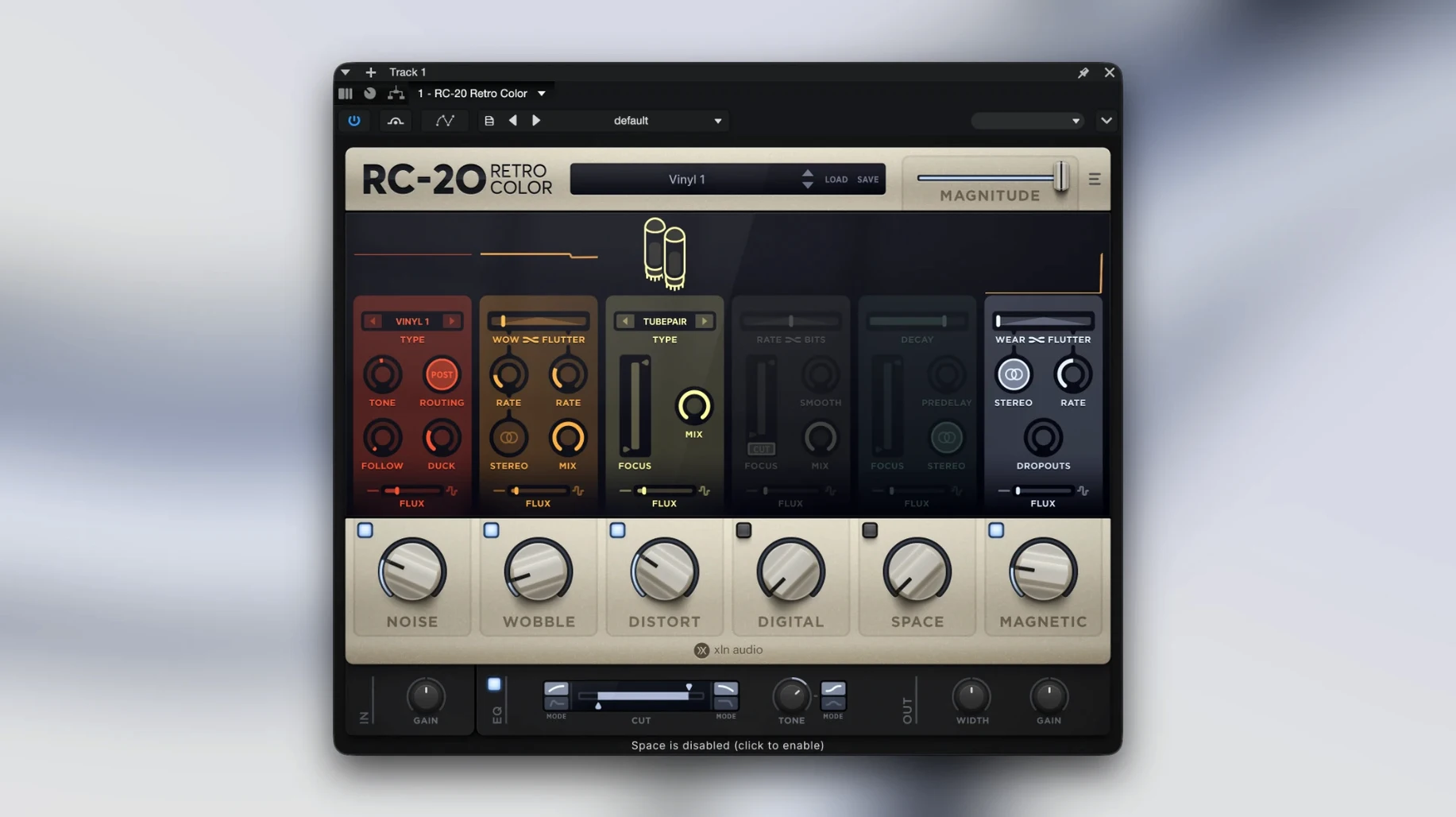
In the edit
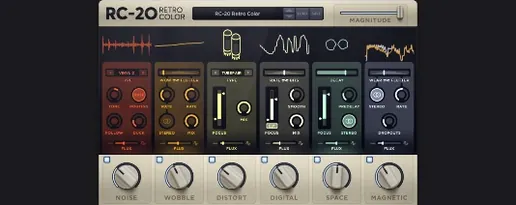
The current version, 1.5.1, is a 64-bit-only release that runs natively on Apple Silicon — good news if you’ve moved on from Intel. RC-20 Retro Color is a creative effect plugin that recreates the feel of vintage recording equipment. It’s built around modules that handle noise, wobble, distortion, space, and the colour of magnetic tape or vinyl, and you can use them together or switch them on individually depending on how much character you want.
The plugin ships in VST, AU and AAX formats, so it works across Logic, Ableton Live, Pro Tools and pretty much any modern Mac DAW. The presets cover a wide range of uses, from subtle warmth to full lo-fi degradation. There’s also a built-in manual link inside the plugin, which saves digging through folders when you want to know what a control does.
It’s a straightforward tool for adding texture that doesn’t get in the way. If you’re after that worn-in, coloured sound without spending ages routing effects, this does the job quickly.
Works only on macOS 10.13 or later
RC-20 Retro Color is a 64-bit plugin, so it won't show up in older 32-bit hosts. That's not a problem for anyone running a recent Mac — macOS 10.13 or later covers High Sierra through to the latest Sonoma and beyond. The installer is a standard disk image: mount it, run the procedure and you're done. No extra licence managers or background services to wrestle with.
Because it's native on Apple Silicon, the plugin uses the same processor architecture as your M-series Mac without Rosetta translation. That means it loads quickly inside your DAW and sits comfortably alongside other native plugins. On Intel Macs it runs as a 64-bit x86 plugin, which is still the norm for most studios. Either way, the six effect modules behave the same way — the code just runs on whatever chip you've got.
The interface is clean and readable at typical screen resolutions. There's no separate installer for VST versus AU versus AAX; the installer places all three formats so your host picks up the right one automatically. If you switch between DAWs — say, Logic for writing and Pro Tools for mixing — you won't need to install again.
A workflow for adding vintage texture to a vocal
Here's how I might use RC-20 to give a dry vocal some character without losing intelligibility. Start with one of the preset categories — something like the Lo-Fi or Vinyl banks — and audition a few while your vocal loops. You'll hear the plugin adding noise, wobble and a bit of saturation all at once.
Once you find a preset that's in the right ballpark, start turning modules off to see what's doing the work. Maybe the Magnetic module is giving you that softened high end, but the Wobble is too much for a verse. Switch Wobble off, or turn its mix down. Then go into the Noise module and choose a different noise type — tape hiss instead of vinyl crackle, for instance — until the background sits behind the vocal rather than competing with it.
Use the Flux engine to introduce subtle random variation over time. A small amount of Flux on the Wobble or Distort modules stops the effect sounding static. The vocal will drift in and out of colour naturally, which is closer to how old recordings behave. Finally, adjust the global mix knob to blend the processed signal with the dry one.
If you're working on a full mix, you can duplicate this chain across multiple tracks — the plugin loads independently in each instance, so the Flux engine generates different random movement per track. That keeps everything feeling cohesive without being identical.
Shows up in Audio Units folder in Logic and VST in Ableton
RC-20 works as a standard audio unit or VST plugin, so it integrates with any DAW that supports those formats. In Logic Pro, it appears in the Audio Units folder under the XLN Audio category. In Ableton Live, you'll find it under VST3. Pro Tools users get AAX. There's no standalone app — it's always inside your host, which is typical for an effect plugin and keeps your session tidy.
On the macOS side, the plugin respects system audio settings and core audio drivers, so there's no extra configuration for input or output. If you use Audio Units MIDI or automation in your DAW, you can automate any RC-20 parameter the same way you would a built-in effect. That's useful for fading the noise floor in and out during an intro, or ramping up the wobble on a bridge.
The in-app manual link opens your default browser and points to the PDF or web page. It's a small thing, but it means you never have to hunt through Application Support folders or remember where you saved the documentation. If you keep your browser open while producing, it's one click away.
More modules than iZotope Vinyl's simple vinyl noise focus
There are a few other plugins in the lo-fi and vintage texture space, and they each approach it differently.
iZotope Vinyl is a free plugin that focuses specifically on vinyl noise, crackle and mechanical wear. It's simpler — fewer modules and less control over individual elements. RC-20 gives you magnetic tape, digital artefacts and a dedicated Flux engine, which Vinyl doesn't have. If you only need occasional vinyl effects, Vinyl is fine. If you want a broader palette of vintage textures from one plugin, RC-20 covers more ground.
Waves J37 Tape models a specific tape machine from the Abbey Road studios. It does saturation, wow and flutter, and tape compression very well, but it's a single-purpose tool. RC-20's Magnetic module scratches a similar itch, but you also get noise, distortion, space, digital and wobble modules in the same window. J37 is great if you know you want tape. RC-20 is better if you want to layer different kinds of degradation without loading four plugins.
Soundtoys Effect Rack (or individual Soundtoys plugins like Decapitator and FilterFreak) can be combined to create vintage-style effects, but you're building the chain yourself. RC-20 gives you a curated set of modules that are designed to work together, with the Flux engine adding movement across all of them. Soundtoys plugins are more flexible in some ways, but RC-20 is faster when you want a cohesive lo-fi sound without patching.
Each of these has its place. RC-20 sits in the middle: more complete than a single-effect plugin, more focused than a modular rack, and native on both Apple Silicon and Intel Macs without any extra work.
Mac it needs
- macOS 10.13 or later
- 64-bit only
- Intel or Apple Silicon
Questions I actually get
Is RC-20 Retro Color compatible with Apple Silicon?
Yes, version 1.5.1 runs natively on Apple Silicon Macs.
What plugin formats are available on Mac?
The Mac version is available in VST, AU and AAX formats.
What are the minimum system requirements for Mac?
You need macOS 10.13 or later, and the plugin is 64-bit only.
Installing on a Mac
- Mount the downloaded disk image.
- Run the standard installation procedure.
Notes from photographers
Sign in or create your account to leave a comment.
No notes from photographers yet. If you have used this on a real folder, say which camera and which Mac.