 Get it for my Mac (259 MB)
 VocalNet
1.0.4

- Version
- 2.6.1
- Developer
- iZotope
- Interface in
- English
- Licence on file
- Included
- Chip support
- Apple Silicon, Intel 64-bit
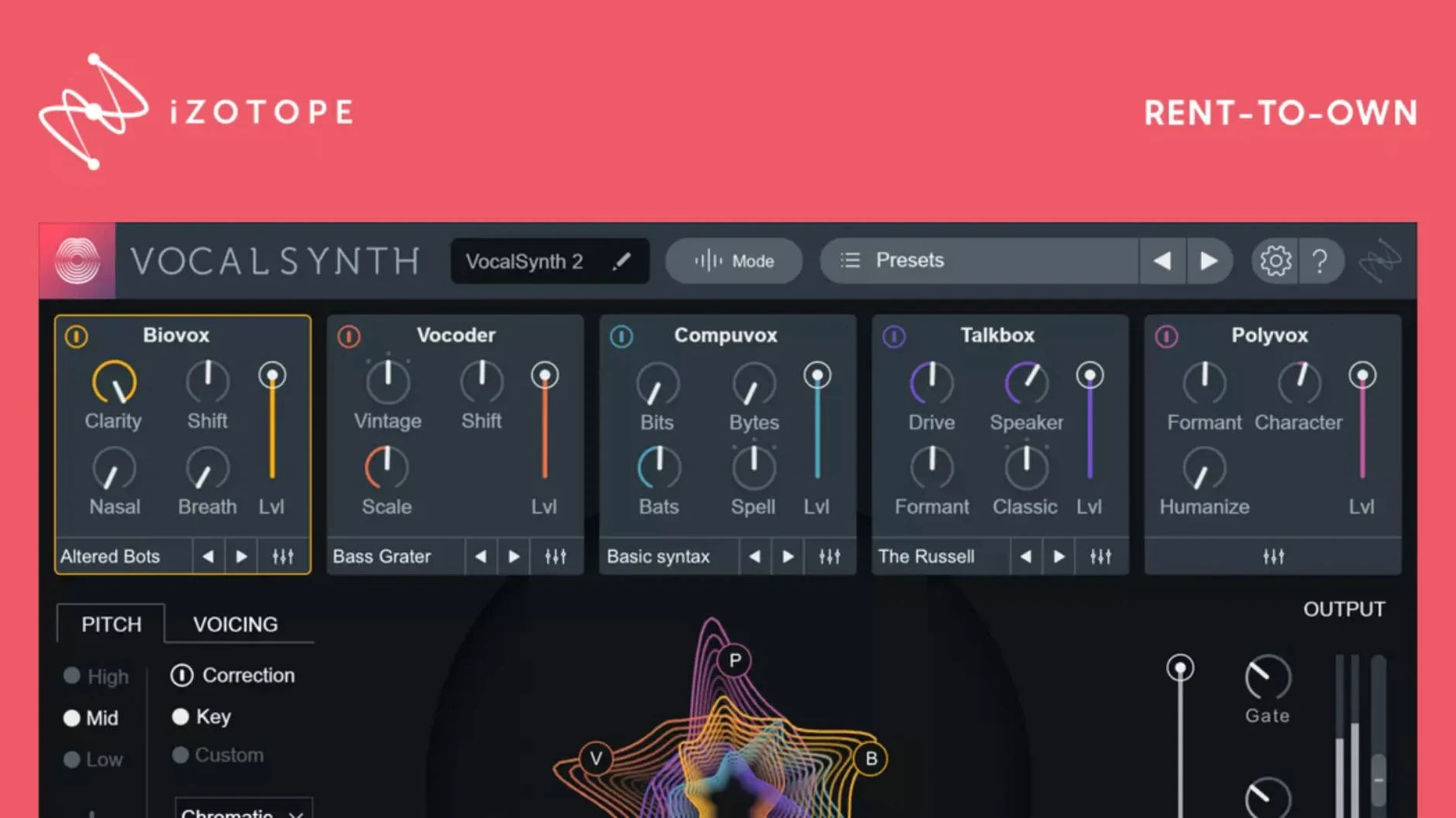
In the edit
VocalSynth 2 is a vocal processing plugin that stacks five creative modules into a single interface. On a session, it lives on a vocal track or a send bus, ready to add texture, formant shifting or vocoder-style effects without routing through multiple plugins.
Layering harmonies and doubling effects on a lead vocal bus
- Layering harmonies or doubling effects using the Polyvox module on a lead vocal bus
- Sidechain modulation on a backing vocal group to create rhythmic filter sweeps
- MIDI-triggered vocoder patches from a synth track routed into the plugin
- Quick vocal chops and glitch effects with the Biovox and Compuvox modules
Native Apple silicon support and iZotope ecosystem integration
- Runs natively on Apple silicon and Intel Macs, supported from macOS Monterey 12.3.x
- Works in Auto, MIDI and Sidechain processing modes depending on the job
- Part of iZotope's ecosystem, so it can communicate with other iZotope plugins on the same session
- Interface is in English only
Formant shifting and glitch effects for electronic pop and hip-hop
Music producers working in electronic genres will find a lot to like here. The combination of formant shifting, vocoder effects and glitch-style processing fits naturally into pop, hip-hop and dance productions where the vocal isn't just a lead but an instrument in its own right. Mix engineers who deal with client vocal stems that feel flat or thin can reach for VocalSynth 2 to add character without re-recording or layering takes. Sound designers and composers working on film or game cues also benefit: the five modules let you reshape spoken word or sung material into textures that sit behind a scene or trigger from a MIDI controller in real time.
Mac users who already own other iZotope plugins get an extra advantage. Because VocalSynth 2 talks to Neutron, Ozone and Tonal Balance Control, you can route vocal processing decisions into your mix bus chain or balance adjustments without jumping between plugin windows. That inter-plugin communication saves time when you're tweaking a vocal sound against the rest of the mix.
Adding movement to a pop chorus with Polyvox and filter sweeps
I had a pop vocal recording that sounded fine but needed movement across the chorus. The track had a lead vocal, a double and a few ad-libs. Instead of automating filters on each clip, I dropped VocalSynth 2 onto the lead vocal bus and set the processing mode to Auto. From there I started with the Biovox module to add a subtle breathy texture, just enough to make the vocal feel less dry.
The Polyvox module came next. I dialled in a simple harmony a third above the original, kept the level low so it felt like a natural double rather than a choir. The Compuvox module let me add a little stutter effect on the ad-lib section by adjusting the gate speed. I didn't touch the Vocoder or Effects modules on this pass, but having them ready meant I could try out a filter sweep on the chorus later.
What made the session move quickly was not having to open separate plugins for each effect. The five modules all sit inside one window, so I could audition harmonies, glitch and formant shifts without bouncing audio or switching plugin instances. The spectral display helped me see which frequencies the vowel sounds were hitting, which made it easier to balance the Biovox texture against the original vocal without clashing.
Building a MIDI-triggered vocoder patch from scratch
Start with a synth pad on a MIDI track and a vocal phrase on an audio track. Insert VocalSynth 2 on the vocal track and switch the processing mode to MIDI. Route the MIDI output from the synth track to VocalSynth 2 — in most DAWs this is a simple send or track routing option.
Now the vocal will respond to the notes played on the synth. The Vocoder module in VocalSynth 2 becomes the main player here. Adjust the band count to match the range of the synth pad; fewer bands give a more classic vocoder sound, more bands keep the vocal intelligible. Blend in a little Polyvox to thicken the result if the patch feels too thin.
From this point you can record the MIDI part in real time or draw notes into the piano roll. The synth pad provides the carrier and the vocal becomes the modulator, so the result changes depending on which notes you play. For a chorus section, try holding longer notes. For a verse, use shorter stabs to keep the vocal rhythm intact.
Real-world scenario: a producer finishing a vocal mix
Kate, a producer working on a pop track, had a lead vocal that sat well in the verse but got lost when the chorus hit with layered synths and drums. She inserted VocalSynth 2 on the vocal bus and used the Effects module to add a bandpass filter sweep that opened on the downbeat of each chorus bar. The Sidechain processing mode let her key the filter movement to a kick drum trigger, so the vocal pulsed in time with the rhythm without manual automation. The chorus vocal cut through without raising the level, and she kept the dry/wet mix at about 40 percent so the original vocal character stayed intact.
New this release
- Fixed an issue where existing authorisation was not recognised for some users after updating from version 2.5.0
Mac it needs
- macOS version: not specified by the developer for this release
- Architecture: Intel and Apple Silicon
- Interface language: English
Questions I actually get
Does VocalSynth 2 work on Apple silicon Macs?
Yes, version 2.5.0 added native support for Apple silicon, so it runs without Rosetta on M-series Macs.
Can I control VocalSynth 2 with a MIDI keyboard?
Yes, the plugin includes a MIDI processing mode that lets you trigger vocoder and harmony effects from an external controller or MIDI track.
Installing on a Mac
- Open the downloaded package and run the installer.
- Follow the on-screen instructions to complete the installation.
- Activation instructions are included inside the package — check the accompanying file if needed.
Notes from photographers
Sign in or create your account to leave a comment.
No notes from photographers yet. If you have used this on a real folder, say which camera and which Mac.