 Get it for my Mac (50 MB)
 Cymatics QUAKE
1.0.0
- Version
- 1.2.4
- Developer
- Cradle
- Interface in
- English
- Licence on file
- k'ed by GUISEPPE
- macOS it runs on
- macOS 10.14 or later
- Chip support
- Apple Silicon, Intel 64-bit
In the edit
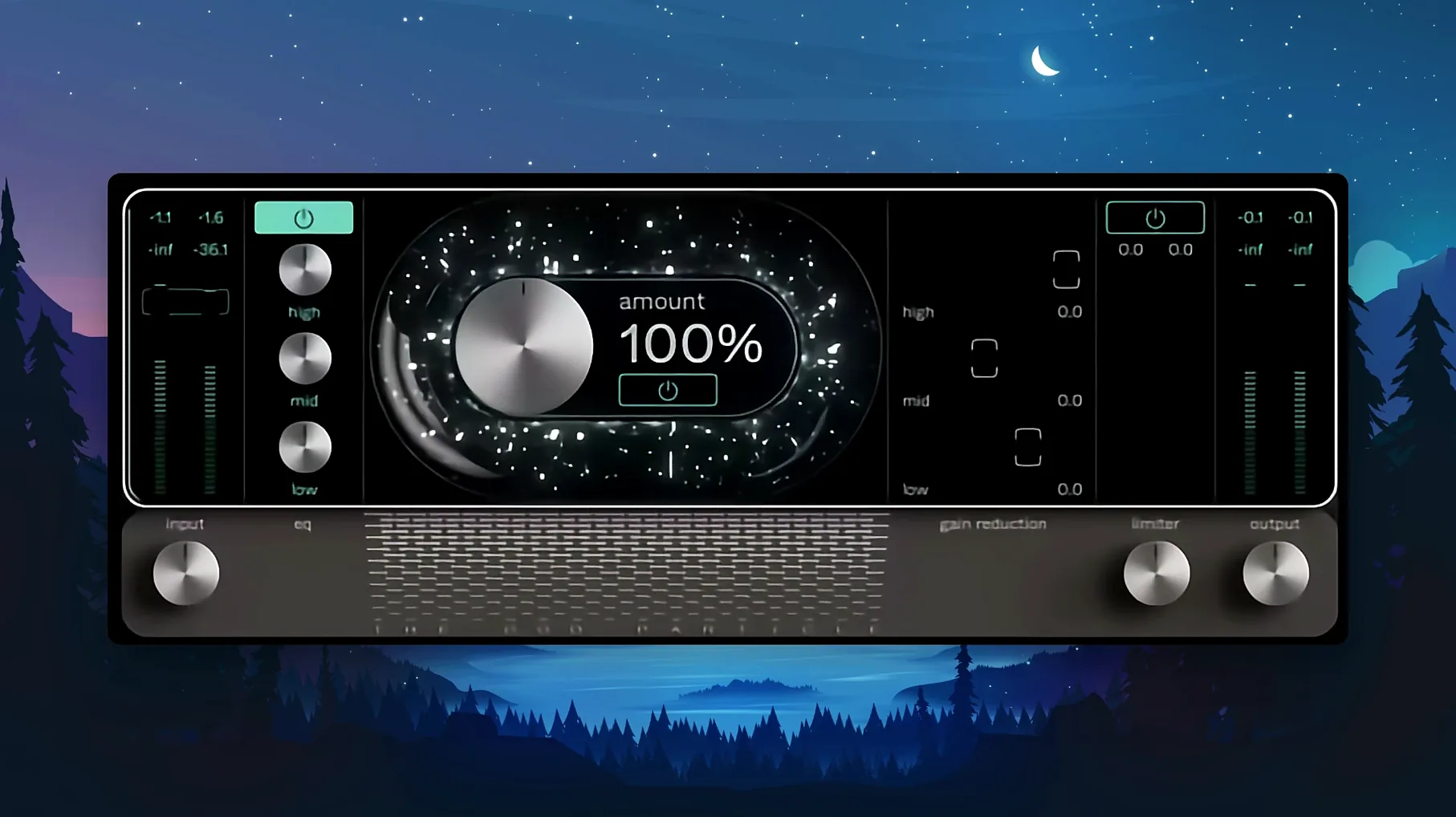
If you’re running macOS 10.14 or later on an Intel or Apple Silicon Mac, Cradle The God Particle is a plug-in that fits right into your mix bus or drum bus. Developed with Jaycen Joshua, it’s built to add depth, detail and clarity without squashing the life out of your track.
Adaptive limiter pushes your mix to commercial loudness
- Adaptive limiter – this is the key piece. It aims to push your mix to commercial loudness while keeping transients and dynamics intact. No pumping, no flatness.
- Character section – shifts the tone and presence of the signal. Useful for adding weight to a drum bus or opening up a group of instruments.
- Output trim – fine-tune the final level after the limiter has done its work. Straightforward, but essential when you’re chasing that last bit of headroom.
Where it shines
The plug-in was designed with the master channel strip in mind, so it’s a natural fit for final mix processing. But the developers also point to the drum bus and grouped instruments as places where it can make a real difference. The controls are simple enough to dial in quickly, and the adaptive limiter does the heavy lifting on loudness. For a single plug-in that handles both character and level, it’s a tidy solution.
Once Cradle The God Particle is installed and authorised (the usual .dmg or .pkg installer, nothing fancy), here are a few things worth checking in those first sessions. They’ll help you get a feel for what it does without second-guessing the controls.
Starting out: a few practical first steps
- Load it on a quiet section first. Before you hit play, set everything flat – no character, no output trim. Solo a section of your mix that has some headroom, then bring the adaptive limiter up slowly. Listen for what happens to the transients: a snare hit or a kick should stay punchy, not collapse.
- Try it on a drum bus with the character engaged. The tone shift can be subtle at first, but you’ll hear it in the low-mid weight. A quick A/B will tell you if the plug-in is adding the right kind of thickness or taking away air. I usually nudge the character knob until the snare body feels right, then back off by a hair.
- Use the output trim to match levels before you decide. It’s easy to mistake louder for better. After you’ve set the limiter, bring the output trim down so the bypassed and active versions sit at the same perceived loudness. That’s the only honest way to judge clarity versus plain volume.
- Save a preset once you find a setting you like. The plug-in saves its state inside the DAW project anyway, but having a few go-to presets for mix bus and drum bus speeds things up across sessions.
Predictable adaptive limiter behavior across source material
The current build, 1.2.4, is the result of refinements made over about three years. For most users, the main difference in daily work is predictability: the adaptive limiter’s behaviour is more consistent across different source material than earlier versions. You don’t have to guess how hard you can push it before the mix starts to lose its transient information.
There’s also a better sense of how the character section interacts with the limiter. In older builds, you could sometimes hear a tonal shift after the limiter grabbed a peak; in 1.2.4, the two stages feel more independent, which makes it easier to dial in colour without worrying the loudness will change unexpectedly. If you’ve been holding off updating from an earlier version, this is the one to grab.
Plug-in missing in your DAW after installation
- The plug-in doesn’t show up in your DAW after installation. This usually means your Mac scanned the plug-in folder before the file was fully placed. Restart your DAW’s plug-in scan, or restart the DAW entirely. If that doesn’t fix it, confirm you installed the correct format (AUX, VST3, AAX) for your host. The installer includes all common formats, so it’s a matter of pointing your DAW to the right folder.
- You hear distortion even at moderate levels. Check that your mix bus isn’t already hitting hard before Cradle The God Particle. The adaptive limiter expects a reasonable input level; if the signal is already clipping into the plug-in, no amount of limiting will clean it up. Back your previous bus processing off until you see green or amber levels, then start again from the plug-in.
- The character section seems to do very little on some tracks. That’s often a sign the source material is already heavily processed. Try the plug-in earlier in your chain, or on a subgroup where the sound is less finished. On a raw drum bus or a stereo group of synths, the character knob has more to work with.
- Latency feels off during tracking or recording. Cradle The God Particle is primarily a mixing and mastering tool, so it’s not designed for low-latency monitoring. If you’re laying down tracks with it on the master bus, bypass the plug-in during recording and only engage it for playback and bouncing.
Runs natively on Apple Silicon and Intel 64-bit Macs
The plug-in runs natively on Apple Silicon and Intel 64-bit Macs under macOS 10.14 and later, which means it works in both native and Rosetta 2 DAW environments on M-series machines. If you use Apple’s Audio Unit (AU) format, you’ll find it alongside your other AU plug-ins without extra configuration. For VST3 and AAX hosts, the install routine places the files where your DAW expects them.
Because it’s a channel-strip style processor, it works well in a chain: you can place it after an EQ and before a dithering tool on your master bus. On a drum bus, it pairs nicely with a transient designer or a parallel compressor. The plug-in doesn’t care about the order, but if you find the character section feels heavy, try moving it before a subtle compressor rather than after. That way the character gets glued into the dynamics rather than layered on top.
One thing to note: the interface is English only, so if your macOS runs in another language, you’ll still see the controls in English. That’s fine for most producers, but worth knowing if you prefer a localised UI. It’s a small thing, but it saves a moment of confusion when you first open the plug-in.
Mac it needs
- macOS 10.14 or later
- Intel 64-bit or Apple Silicon processor
- Interface language: English
Questions I actually get
What Macs does Cradle The God Particle run on?
It supports macOS 10.14 and later, and works on both Intel 64-bit and Apple Silicon Macs.
Who was this plug-in developed with?
It was developed together with mixing engineer Jaycen Joshua.
Installing on a Mac
- Download the installer package.
- Run the installer and follow the on-screen prompts.
- Open your DAW and scan for new plug-ins.
- Tip: Restart your DAW after installation to make sure it picks up the plug-in.
Notes from photographers
Sign in or create your account to leave a comment.
No notes from photographers yet. If you have used this on a real folder, say which camera and which Mac.