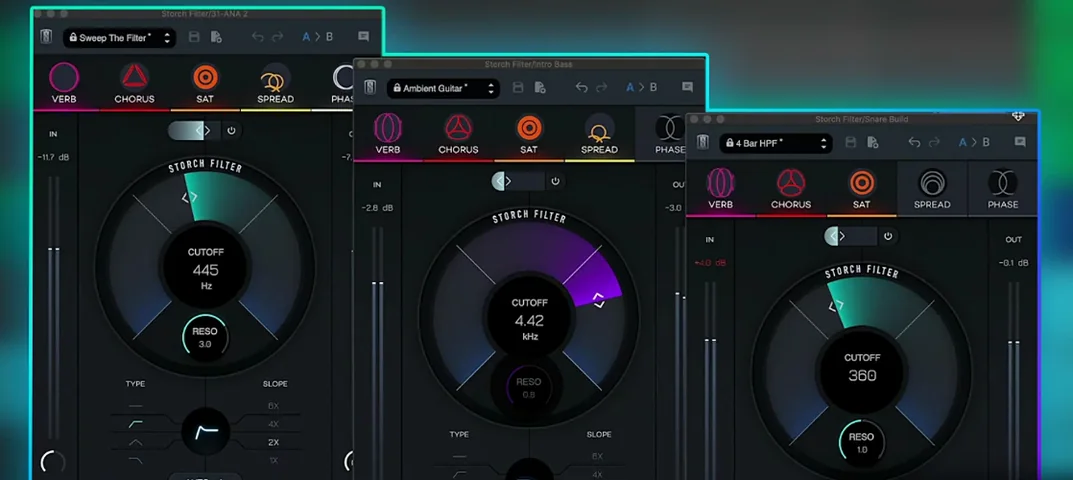
 Get it for my Mac (1.2 GB)
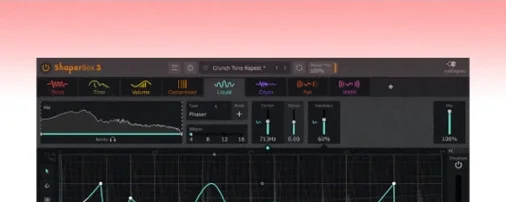 ShaperBox
3.6.1

- Version
- 2.1.5
- Developer
- Xfer
- Interface in
- English
- Licence on file
- k'ed by Team V.R
- macOS it runs on
- macOS 10.13 or later
- Chip support
- Apple Silicon, Intel 64-bit
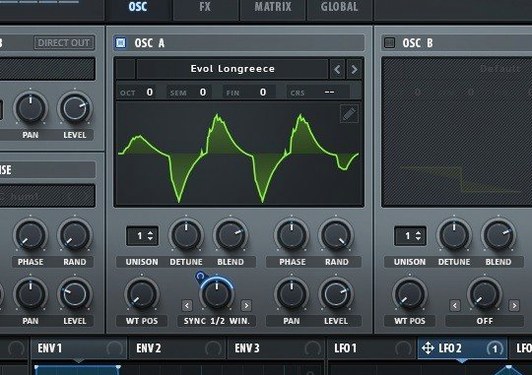
In the edit
Serum is the kind of plugin that shows up in session after session, whether you are scoring a short film or building a club track from scratch. Xfer Records’ wavetable synth has been a staple for years, and the current version — build 2.0.24 — keeps the core workflow while adding a few thoughtful updates.
Unison Warp and other new additions keep the lo-fi grit you expect
The engine still lets you stack one oscillator up to 16 voices and apply sample-rate reduction as a filter process, which is handy for that gritty lo-fi texture. Newer additions like Unison Warp let you set the unison voices differently, and Unison WT Pos can assign a different waveform to every unison voice at once. The flangers, phasers and comb filters now track the played musical note, so they follow your melody rather than staying fixed. Serum 2 runs on both ARM and x86 64-bit Macs, and the interface remains in English. If you already know your way around the original, you will feel right at home.
Start with a saw wave and four-voice unison for a thick bass patch
Start with a single oscillator. Pick the default saw wave from the wavetable menu and set the oscillator to four voices of unison with the detune knob around a quarter of the way up. That gives you a thick, chorused sound before anything else happens. Route the oscillator through filter A set to low-pass, cutoff around halfway, resonance just below self-oscillation. Now go to the modulation section and assign an envelope to the cutoff. Set the envelope attack to zero, decay to about half a second, sustain low, release short. Play a low C. You should hear a classic pluck that decays into a soft sub.
To give it movement, add a second oscillator an octave down with the same routing but a different wavetable — try something with a harsher harmonic content, like the square wave. Mix the levels so the sub oscillator sits underneath the main sound. Now use the flanger effect, set to track the note, and dial in a slow rate with low feedback. The result is a bass that shifts subtly in stereo without losing its punch.
For the final layer, go to the stack settings and add a third voice an octave above the main oscillator, but keep its volume low. This adds a hint of presence without making the patch sound thin. Save the preset and you have a bass that works for everything from techno to trap.
Overloading unison voices muddies your mix before you know it
The most common one is overloading the unison voices. Stacking sixteen voices on every oscillator sounds massive in solo, but in a mix it eats up headroom and makes everything muddy. Start with four or six voices and add more only if the part needs it.
Another mistake is ignoring the wavetable position. Many beginners leave it on the first frame and never explore the rest of the table. Serum’s wavetables change character as you move through them, and mapping that position to an LFO or envelope is where the real expressive power lives. A slow LFO on wavetable position can turn a static pad into something that breathes.
People also forget about the note-tracking on effects. The flanger and phaser default to a fixed rate, which sounds fine on a single note but falls apart when you play a melody. Enable note tracking and the effect speed follows your playing, keeping the texture consistent across the keyboard.
Finally, beginners often skip the sample-rate reduction filter because they think it is only for extreme lo-fi sounds. In small amounts, it adds a subtle grit that helps a synth cut through a dense mix without raising the volume. Try it at ten or fifteen percent and see what it does to a pad.
Works on macOS 10.13 and later for Intel and Apple Silicon Macs
Will it work on my older Mac?
Serum supports macOS 10.13 and later, so if your machine runs High Sierra or anything newer, you are fine. Both Intel and Apple Silicon Macs are supported, and the plugin runs in 64-bit mode only.
Is the demo version usable?
Xfer Records limits the demo to fifteen minutes of play time. That is enough to test compatibility with your DAW and get a feel for the interface, but not enough for a full session. The version you find here does not have that restriction.
Do I need to install extra software first?
No. Serum is a standard plugin. You copy it to your VST or AU folder, apply the patch, and follow the included instructions file. The VR.nfo file contains the exact steps if you get stuck.
Can I use my own wavetables?
Yes. Serum lets you import, edit, and transform your own wavetables in real time. You can drag in audio files or draw waveforms directly. That is one of the main reasons producers stick with it.
Will it work alongside other Xfer plugins?
Serum is part of Xfer Records’ VST suite, so it coexists fine with LFOTool and the rest. They share the same filter types, which makes building a consistent signal chain easy.
Stack octaves from a single oscillator to keep your project clean
The stack settings let you layer octaves from a single oscillator. Instead of duplicating a track and transposing it, you just add a stack voice an octave up or down. It saves time and keeps your project clean.
Unison WT Pos is one of those features that does not get enough attention. It assigns a different waveform to each unison voice, so instead of getting eight copies of the same sound slightly detuned, you get eight different timbres. The result is a texture that changes across the stereo field in a way normal unison cannot match.
The filter types from LFOTool are built in, so you get consistent behaviour across both plugins. If you already know how the filters behave in LFOTool, you will recognise them instantly in Serum.
Sample-rate reduction as a filter process is not just for bit-crushing. Used lightly, it adds a kind of analogue-ish warmth that is hard to get from EQ alone. Try it on a high-pitched lead to take off the digital edge.
Wednesday evening: building a moving lead sound from a blank preset
Wednesday evening, I am working on a track that needs a lead sound with some movement. I open Serum on a MIDI track and start with a blank preset. First, I pick a wavetable called Digital Sync from the menu — it has a bright, slightly aggressive tone that works for leads. I set the oscillator to two voices of unison with moderate detune so it sounds full but not wide.
I route the oscillator through filter B this time, set to band-pass with a bit of resonance. I map an LFO to the cutoff frequency, set to a sixteenth-note rate, and let it pulse. The filter opens and closes in rhythm with the track, giving the lead a rhythmic quality without any sidechain compression.
Next, I add the phaser effect and enable note tracking. I set the rate to match the tempo, around a quarter note, and the feedback low. The phaser sweeps across the sound as I play higher notes, adding movement that follows the melody naturally.
It adds weight to the lower notes without making the patch muddy. I save the preset, play the part, and it sits right in the mix with minimal EQ. The whole process takes about ten minutes, and most of that time is spent trying different wavetables rather than wrestling with the interface.
Later in the same session, I use the same preset as a starting point for a pad. I swap the wavetable to something softer, turn off the LFO modulation, increase the attack time, and add more unison voices. The same core patch becomes something completely different in under a minute. That is the real strength of Serum — you can take a sound you already know and reshape it quickly without starting over.
Mac it needs
- macOS 10.13 or later
- Intel or Apple Silicon (ARM) processor
- Interface language: English
Questions I actually get
Does Serum 2 run on Apple Silicon Macs?
Yes, the plugin supports both ARM and x86 64-bit architectures, so it works on M-series and Intel Macs alike.
What kind of filter effects does Serum 2 include?
It includes flangers, phasers and comb filters, and these effects can now track the musical note you are playing.
Installing on a Mac
- Run the standard installer for your Mac.
- Apply the patch as described in the included instructions.
- Follow the installation and activation notes provided with the release.
- Open the VR.nfo file for the full setup guide.
Notes from photographers
Sign in or create your account to leave a comment.
No notes from photographers yet. If you have used this on a real folder, say which camera and which Mac.