
 Get it for my Mac (924 MB)
 Complete Anatomy
12.6.0
- Version
- 9.0.9
- Developer
- Cycling '74
- Interface in
- English
- Licence on file
- K'ed by TEAM HCiSO
- macOS it runs on
- macOS 11 or later
- Chip support
- Apple Silicon, Intel 64-bit
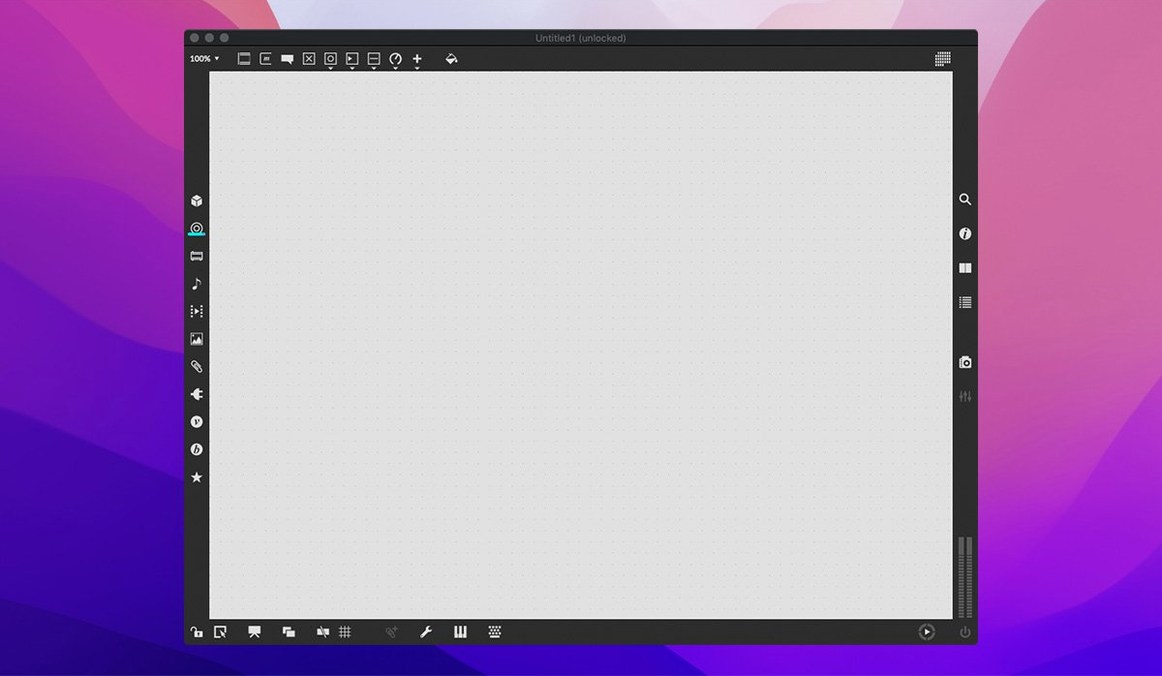
In the edit
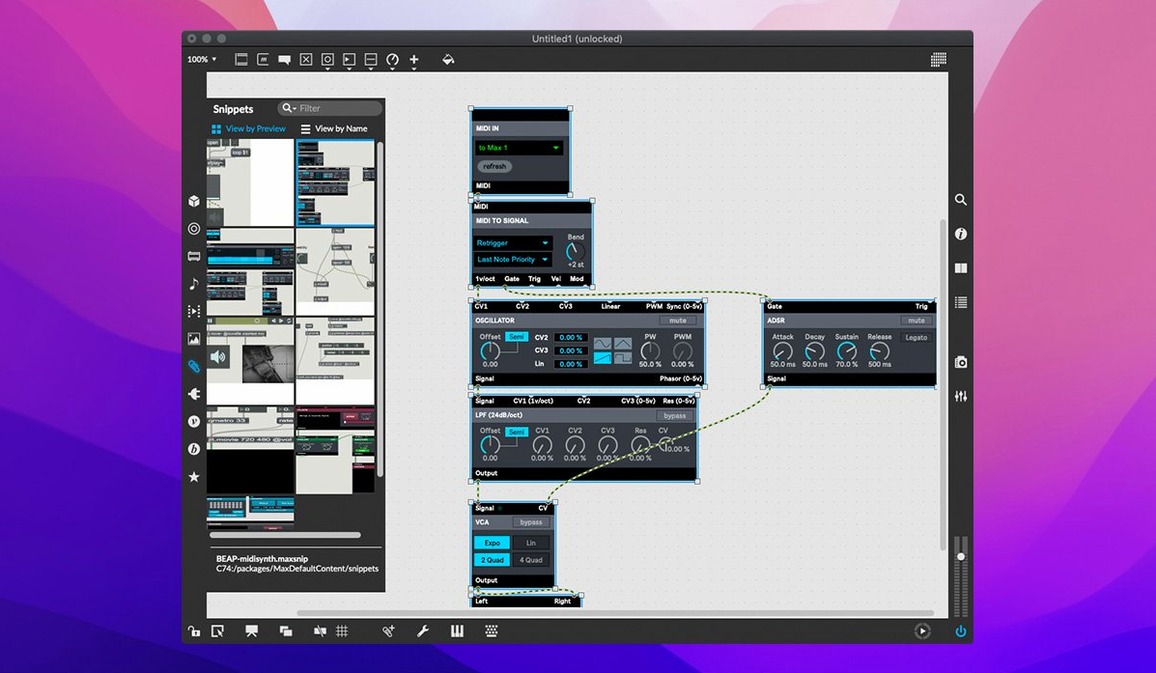
When you are deep into a project and need to route audio in ways no off-the-shelf plugin can manage, you reach for a tool that lets you build exactly what you hear in your head. Max is that tool—a visual programming environment where you connect objects to create everything from synthesisers to interactive installations.
What makes Max useful for experienced users?
Max includes an interactive editor with debugging tools like foreground and background execution, message tracking, and an object inspector. Smart copy and paste keeps your patches clean when you are iterating fast. The cross-platform SDK means you can extend the software with your own externals if the built-in objects are not enough.
Can Max run multiple tasks at once?
Yes. Max can create and run multiple applications and tasks simultaneously, limited only by your computer's memory and speed. That matters when you have a generative music patch running alongside a live visual system.
Is Max 9 compatible with Apple Silicon Macs?
Max 9.0.9 supports both ARM and 64-bit x86 Macs, so it runs natively on M-series chips and Intel machines. The release also bundles RNBO v1.3.5 and fixes an Inspector crash when editing text fields.
Lost a patch window behind other apps? Here's the fix
Even with a solid understanding of the object model, a few things trip people up regularly. One of the most frequent is the patcher window disappearing behind other applications. If you have ever lost a patch in the middle of a live set, the object inspector is where you want to look — it gives you a full view of your object properties without hunting through menus. Another common issue is MIDI routing that seems to work in the editor but goes silent when you switch to performance mode. Check that your MIDI input and output streams are actually selected in the status area; Max can hold onto a previous assignment even after you have changed hardware. Serial device users sometimes find their data arriving in the wrong format. The serial object has a few baud rate and parity settings that are easy to overlook. A quick pass through the interactive help for that object usually clears it up. If the Inspector crashes when you edit or close a text field, that was fixed in version 9.0.9, so make sure you are running the latest build.
Build a monophonic synth that responds to your MIDI keyboard
Let us walk through a practical task from start to finish. You want a basic monophonic synth that responds to a MIDI keyboard and outputs audio through your interface. Open Max and create a new patcher. Place a notein object — it receives MIDI note messages and outputs pitch and velocity separately. Connect its left outlet to a mtof object, which converts MIDI pitch to frequency in Hertz. Send that frequency into a cycle~ object, which generates a sine wave at that frequency. Take the velocity output from notein and route it through a line~ object to create an envelope with a short attack and release. Multiply the output of line~ with the cycle~ signal using a *~ object, then send the result to ezdac~ for audio output. Add a loadbang connected to a gain~ object so you do not blow your speakers on startup. That is a working patch in under a dozen objects. From here, you can add filtering, modulation, or polyphony by extending the chain.
How Max compares with similar Mac tools
Max sits in a space that overlaps with a few other applications, but each takes a different approach. Pure Data is the closest relative — same visual patching paradigm, same object-oriented logic. Pd is open source and runs on older hardware, but its interface is less polished and the built-in tutorials are not as thorough. If you are learning on your own, Max's 40-plus interactive tutorials make the early stages easier. Reaktor from Native Instruments also lets you build synthesisers and effects with a visual drag-and-drop workflow, but it is focused on instrument and effect design rather than general multimedia programming. You cannot control serial devices or track mouse movement in Reaktor the way you can in Max. SuperCollider gives you text-based control over audio synthesis and is extremely powerful, but it requires writing code in its own language rather than connecting objects visually. For artists and designers who think in diagrams, Max keeps the logic visible at every step.
Max runs on both M-series and Intel Macs with macOS 11 or later
Max 9.0.9 requires macOS 11 or later and runs on both ARM and 64-bit x86 Macs, so it covers the full modern lineup from M-series chips to the last Intel models. The installer comes as a disk image that you mount and drag into your Applications folder. After copying finishes, launch the app from Launchpad or wherever you keep your tools. The interface is in English and the disk image includes the bundled RNBO v1.3.5 environment. If you are coming from an older version, the release notes also mention support for button assignments for parameter banks in live.banks, which is useful if you work with Ableton Live and hardware controllers. The patcher window, object inspector, and message tracking all behave as expected on Apple Silicon — no translation layer needed. Max is one of those applications that does not hide its complexity, but it rewards the time you put into learning its objects.
New this release
- Support for button assignments for parameter banks in live.banks. - RNBO v1.3.5 is bundled. - Inspector crash when editing or closing a text field was fixed.Mac it needs
- macOS 11 or later
- 64-bit processor (Intel or Apple Silicon)
- English interface language
Questions I actually get
Does Max include tutorials for new users?
Yes, Max comes with more than 40 interactive tutorials that walk you through the fundamentals of patching, signal flow, and interface design.
What are the system requirements for Max 9?
Max 9 requires macOS 11 or later and a 64-bit processor. It runs on both Intel and Apple Silicon Macs.
Installing on a Mac
1. Mount the downloaded disk image. 2. Drag the app to the Applications folder alias. 3. After copying finishes, launch the app from Launchpad.Notes from photographers
Sign in or create your account to leave a comment.
No notes from photographers yet. If you have used this on a real folder, say which camera and which Mac.
Similar apps
Next to it in Mac Apps
All Mac Apps picks
Complete Anatomy
12.6.0
 Depth Scanner
1.15.6
 djay Pro
5.6.10
 Cockos REAPER
7.4.8
 ClickCharts
9.54
 Element 3D
2.2.3
 EndNote
2025.4
 Final Draft
13.5.0
