
 Get it for my Mac (6 MB)





 Cockos REAPER
7.4.8
- Version
- 9.54+
- Developer
- NCH Software
- Interface in
- Russian, English, German, Spanish, Italian, Korean, French, Swedish, Japanese
- Licence on file
- k'ed by BTCR
- macOS it runs on
- OS X 10.5 or later
- Chip support
- Intel 64-bit
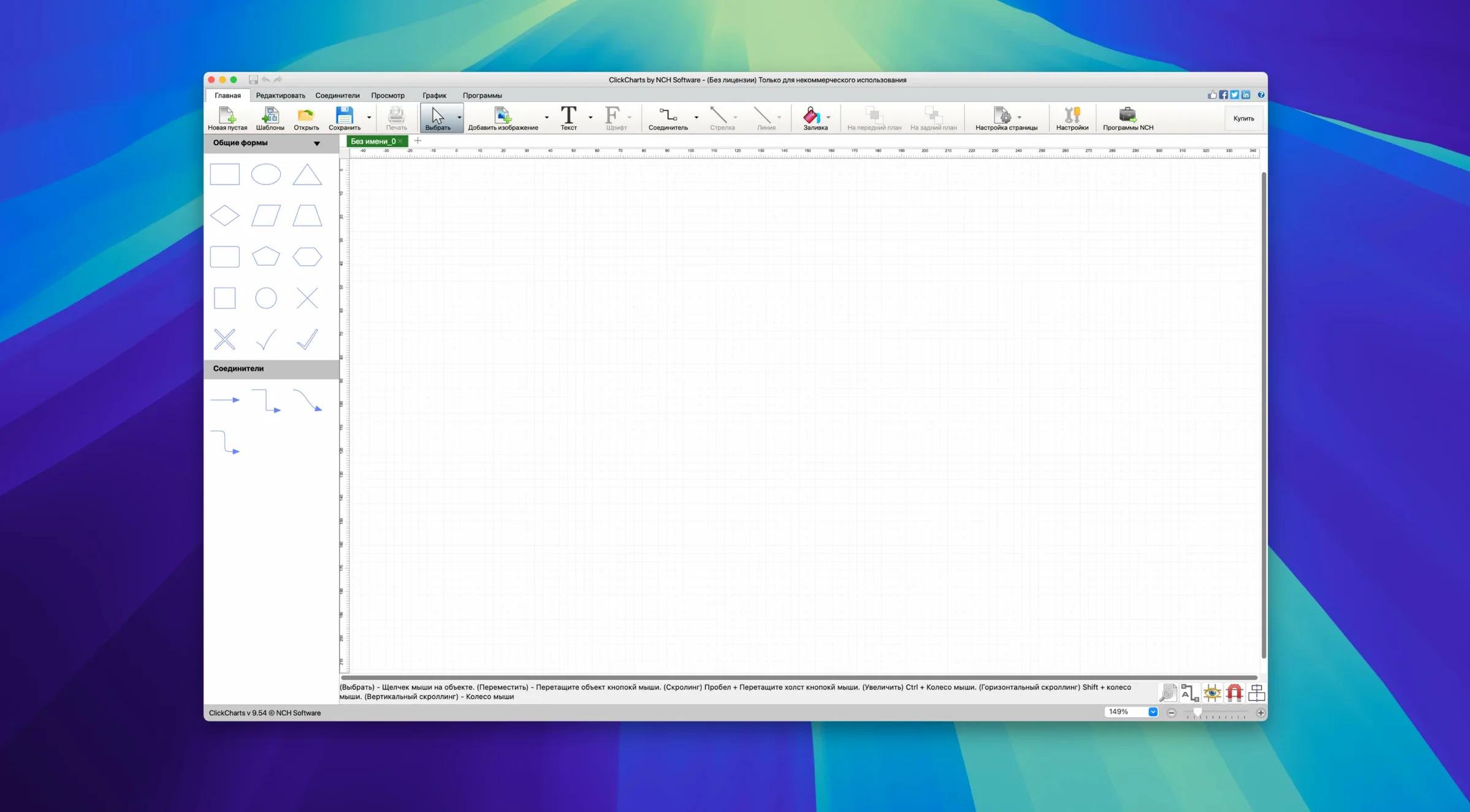
In the edit
ClickCharts 9.54+ brings a clean, intuitive interface to diagram and flowchart work on the Mac. It ships with a large library of symbols and connectors you can customise, plus a range of built-in templates — or you can start from a blank canvas and build your own. Colour schemes, fonts and line styles are all adjustable, so the final diagram looks the way you need it to.
Slots into your existing Mac tools without fuss
If you already use a mix of design, planning and productivity apps on your Mac, ClickCharts slots in without fuss. Multiple people can work on the same diagram at the same time, which makes it handy for team sessions where someone is on a page layout app and someone else is sketching a process flow. Sharing is straightforward too: you can export in different formats or send a direct link. The developer, NCH Software, keeps the focus on getting the job done without overcomplicating things.
Languages and system notes
The interface is available in English, Russian, German, Spanish, Italian, Korean, French, Swedish and Japanese. It runs on macOS 10.5 and later (Intel only), so it works on older Macs that might not handle the latest everything.
A real-world scenario: documenting a department's workflow
Imagine you're a technical writer at a mid-sized logistics firm. Your task is to document the order-fulfilment process so new hires can follow it and so the operations team can spot bottlenecks. You open ClickCharts, pick a flowchart template from the built-in library, and start dragging in the standard symbols — a rounded rectangle for "Receive Order", a diamond for "Check Stock", a rectangle for "Pick and Pack". Within an hour you have a clean, readable diagram that shows every step from order entry to dispatch. You add a hyperlink to the warehouse management system login on the "Pick and Pack" box, and you attach a note explaining the backup procedure if stock is low. Then you export the chart as a PDF and drop it into the internal wiki.
Start with the template library for faster diagrams
If you are new to ClickCharts, here are a few things worth knowing from the start.
- Spend ten minutes exploring the template library before you draw anything. There are ready-made layouts for org charts, mind maps, UML diagrams and data flows, and one of them might already match what you need.
- Use the drag-and-drop placement early and often. Symbols and connectors snap into place, so you can rough out a structure fast and tidy up the alignment later.
- Customise one small diagram end to end — change colours, swap fonts, adjust line thickness — just to see how the style controls behave. Once you know where everything lives, the next diagram goes twice as fast.
- If you share diagrams with colleagues, test the export to PNG and JPG early. Those two formats work well for embedding in documents and presentations, and it helps to confirm the output looks the way you expect before you send it.
The combined installation and activation guide that comes inside the package explains the setup steps clearly, so there is no guesswork when you first open the app.
Ideal for technical writers and documentation leads
ClickCharts is a good fit for anyone who needs to turn ideas into structured visuals without learning a complex new tool. Technical writers and documentation leads will appreciate the support for UML, ER diagrams and data flow diagrams — it covers the kinds of charts that often appear in software specs and process manuals. Project managers and operations staff can use it to map workflows and responsibilities in a way that a spreadsheet cannot. Mind mappers and planners will find the template library useful for brainstorming sessions that need a clean output at the end.
Because it runs on macOS 10.5 and later (Intel only), it is especially useful for teams or individuals who keep an older Mac around for specific tasks. That machine might not run the latest creative suite, but it can handle ClickCharts without complaint.
Mac it needs
- macOS 10.5 or later
- Intel processor
Installing on a Mac
- Open the package you downloaded and find the combined installation and activation guide inside.
- Follow the guide step by step — it covers both installing and activating the software.
- Launch ClickCharts from your Applications folder once the process is complete.
Notes from photographers
Sign in or create your account to leave a comment.
No notes from photographers yet. If you have used this on a real folder, say which camera and which Mac.