
 Get it for my Mac (33 GB)
 Tomb Raider I-III Remastered Starring Lara Croft
1.01
- Version
- 1.2.3 fixed
- Developer
- CREATIVE ASSEMBLY
- Interface in
- English, German, Spanish, Italian, Chinese (Traditional), Chinese (Simplified), Korean, Polish, Portuguese, Turkish, French, Czech
- Licence on file
- Not required
- Chip support
- Apple Silicon, Intel 64-bit
- Edited with it on
- macOS Sequoia, MacBook Air (M1. 2020)
- Out on
- 11.10.2023
- Voices in
- English, German, Chinese (Simplified)
In the edit
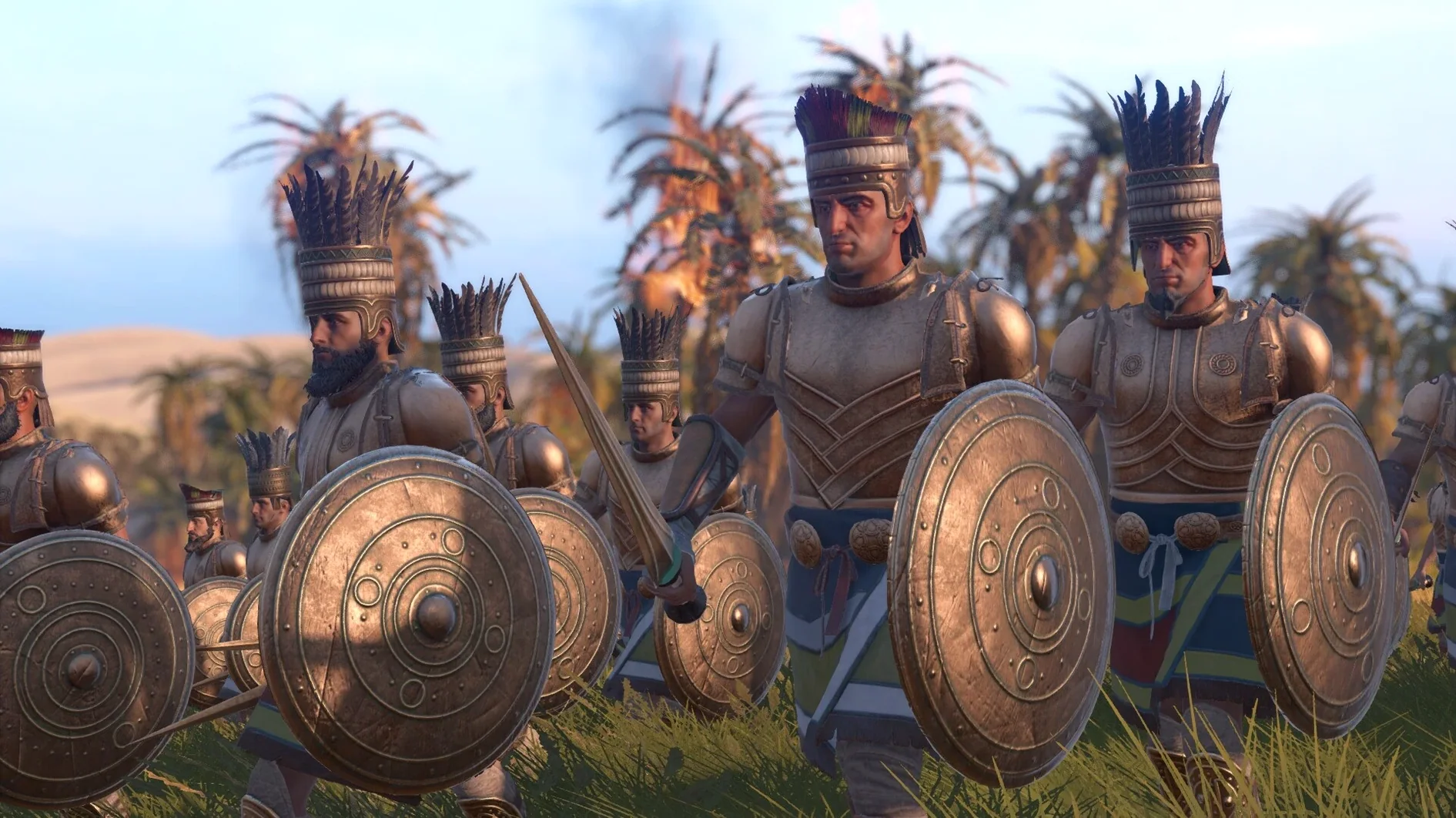
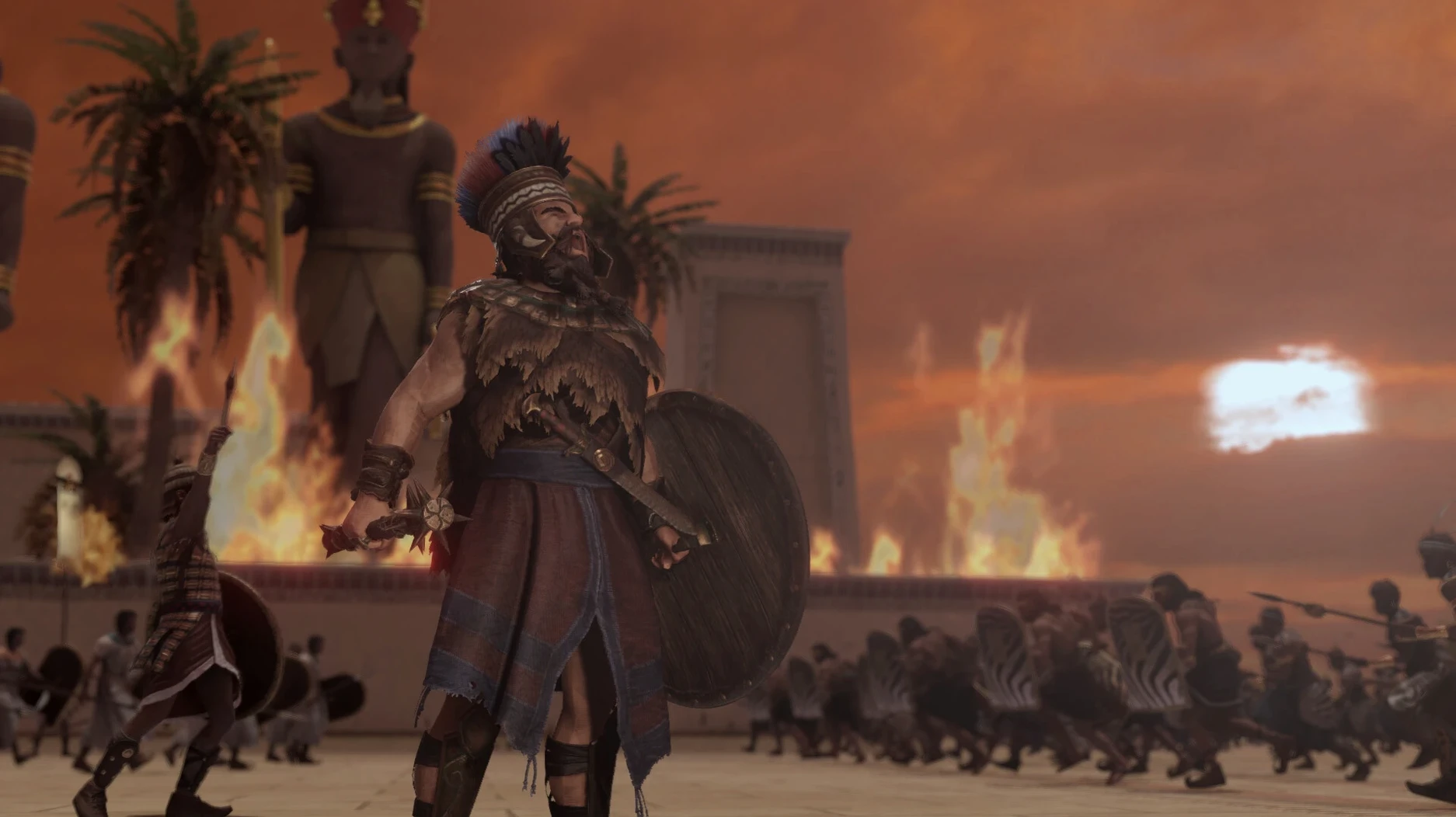
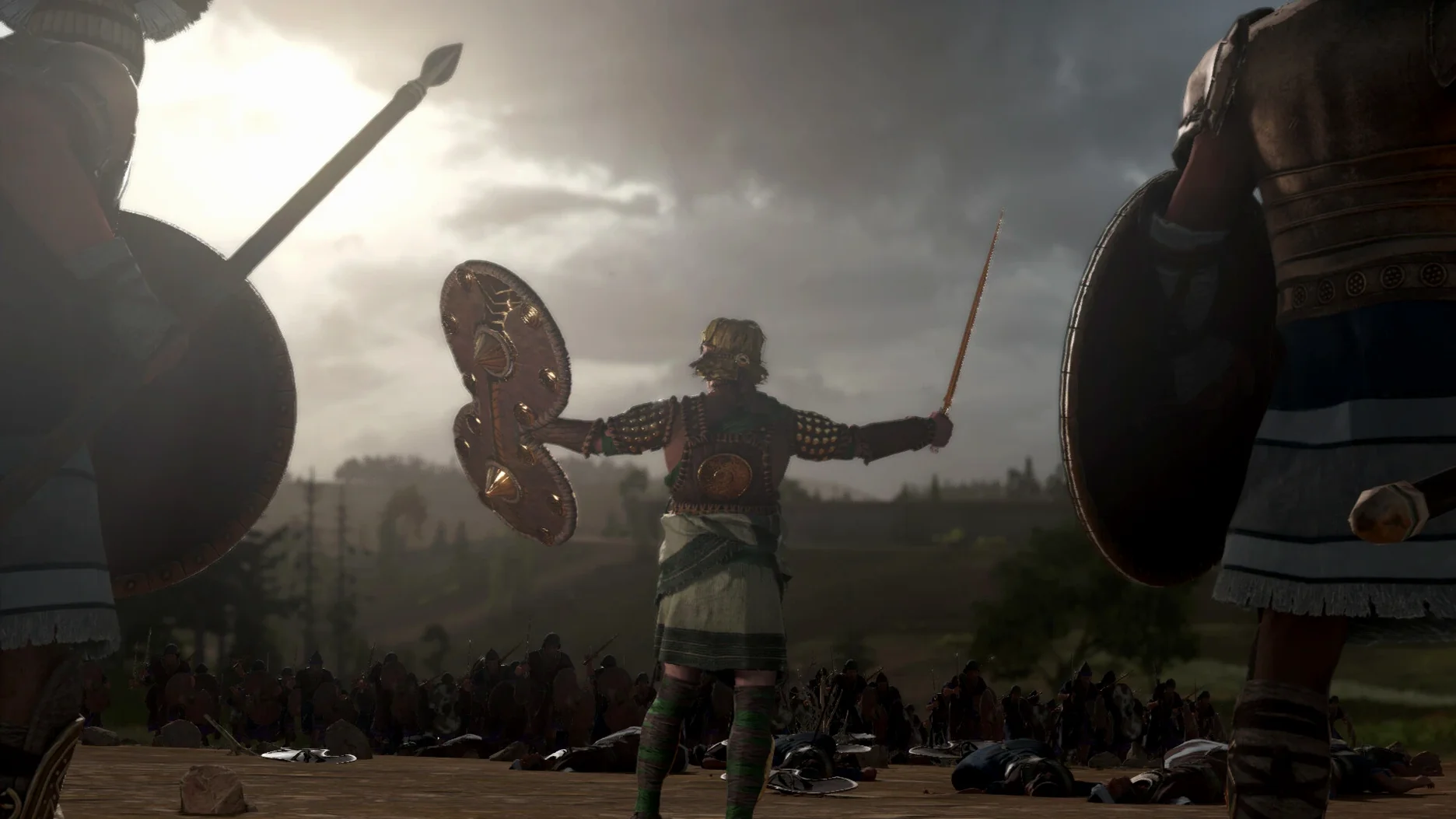
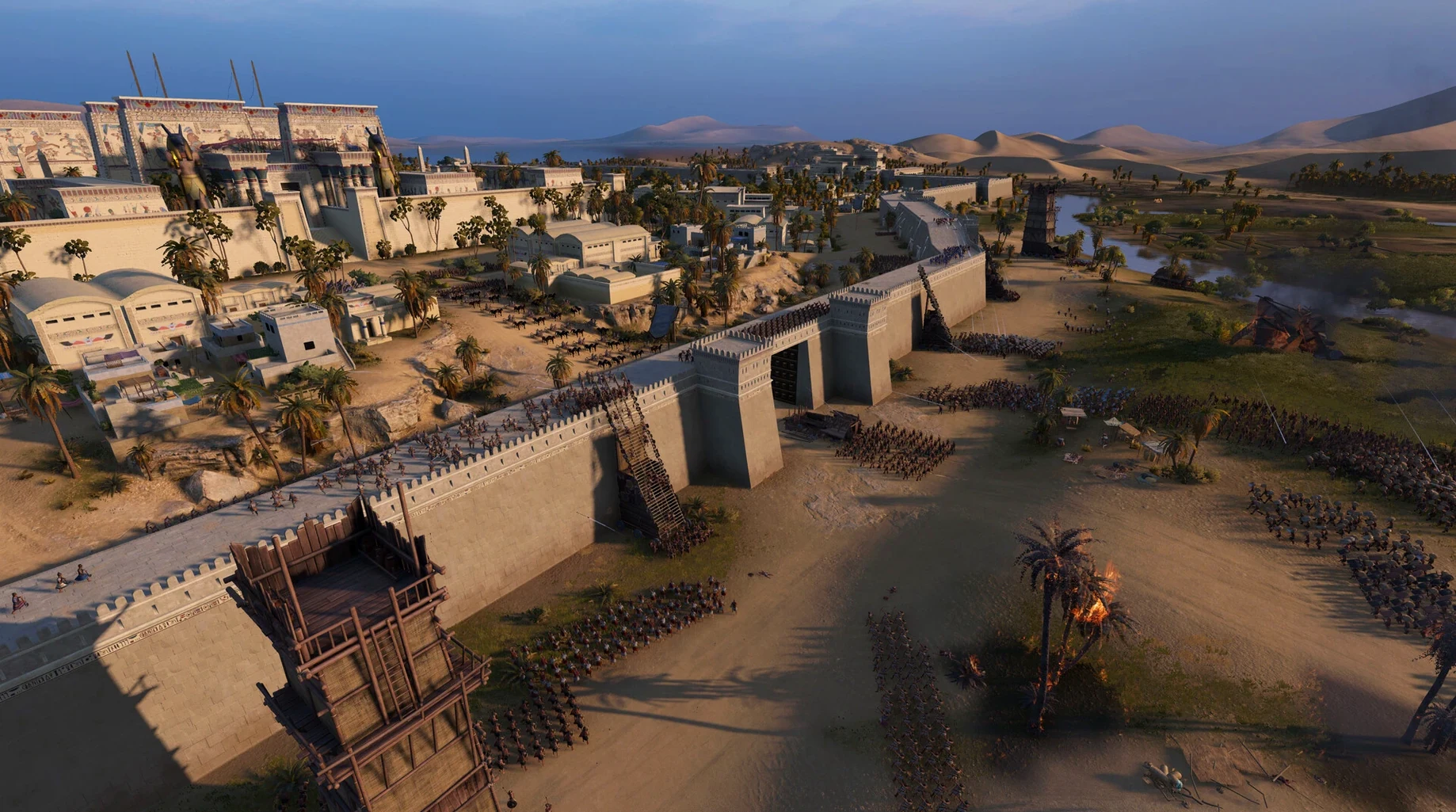
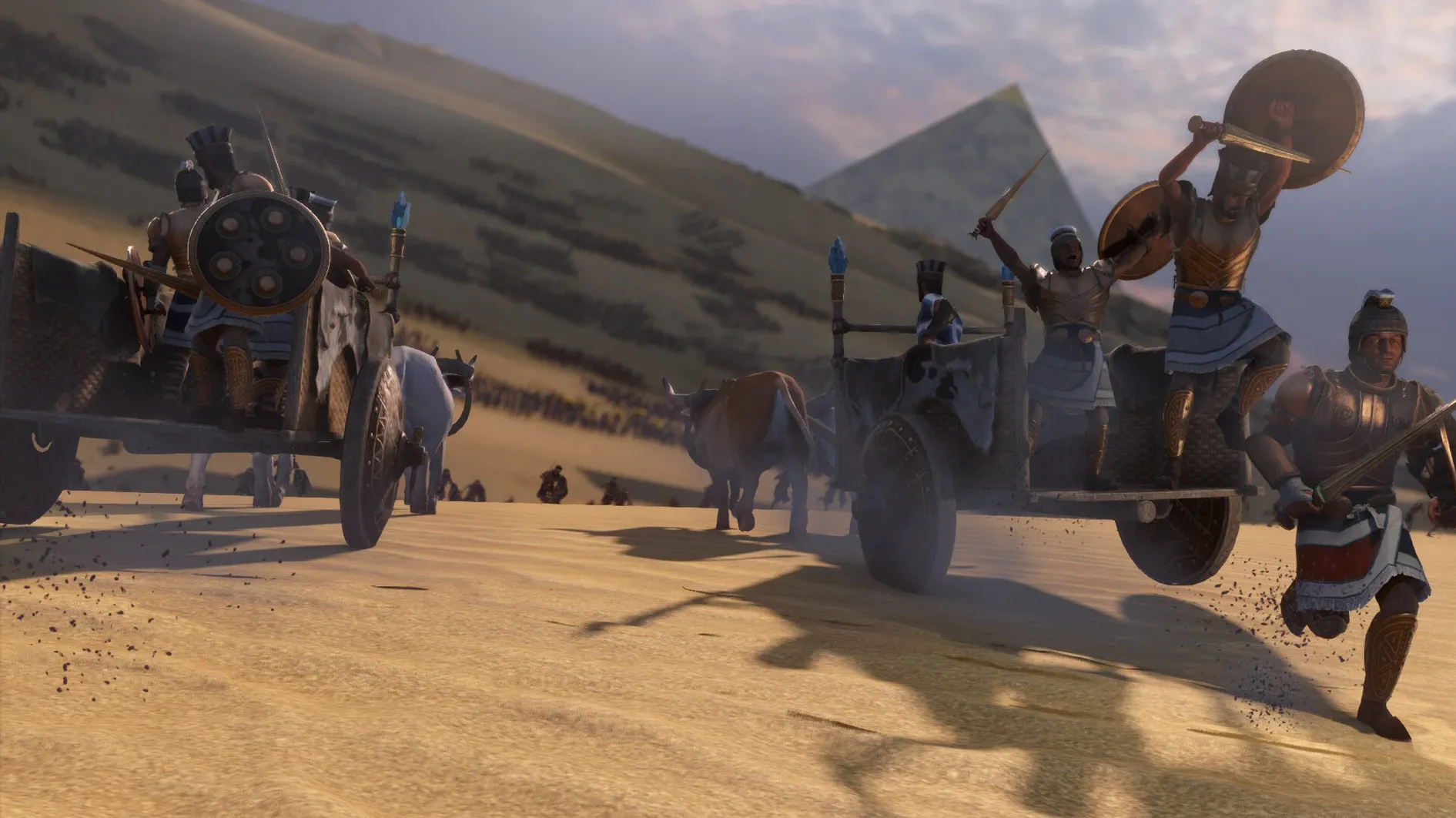
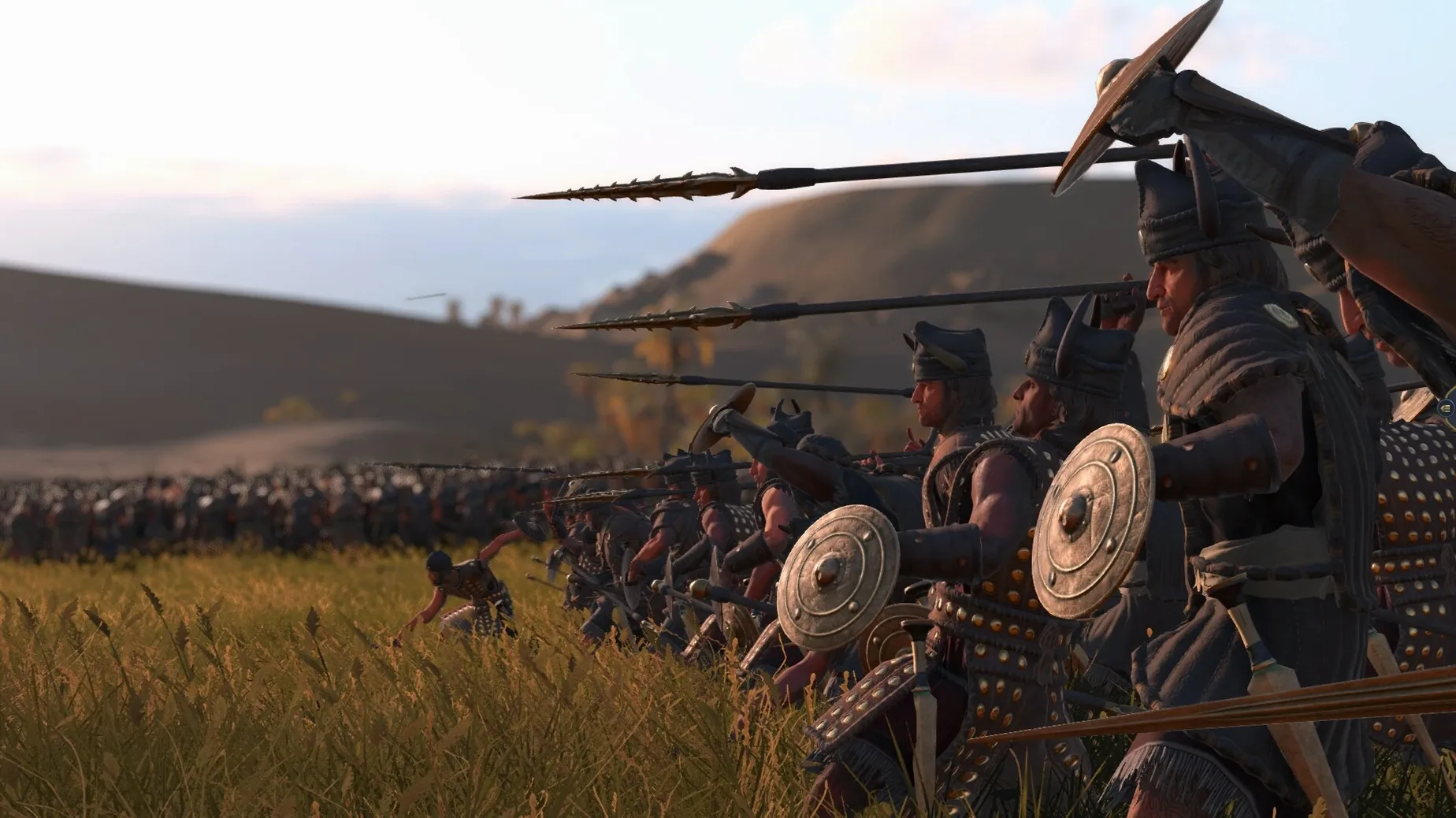
You have a Mac with an M-series chip, and you want a historical strategy game that does not pull punches. Total War: PHARAOH drops you into the Bronze Age Collapse in ancient Egypt, where you lead Egypt, the Hittites, or the Sea Peoples through real-time battles and turn-based empire management. Fire can spread across the battlefield and burn forests and settlement foundations, so positioning matters more than usual.
M1 chip or newer required for Total War: PHARAOH
The official requirement is macOS 13.4 and an Apple M1 chip or later. That covers all Apple Silicon Macs, but Intel machines are not supported. If you are on an M1 or newer, you are good to go.
Keyboard and mouse controls, trackpad works for camera
It uses standard keyboard and mouse controls, same as the Windows version. Trackpad gestures work for camera movement, but a mouse makes the real-time battles easier to manage.
Smooth performance with tweaks for large battles and fire
Larger battles with fire spread and many units can drop frames, so tweak the campaign settings — you can disable natural disasters or adjust resource options to keep things smooth.
A historian’s evening with the Bronze Age
I know a PhD student who teaches ancient history at a London college. She owns an M2 MacBook Air and plays strategy games to unwind. Total War: PHARAOH became her go‑to because the campaign map covers Egypt, Canaan and Anatolia — exactly the region she lectures on. She told me she spent an entire Saturday leading the Hittites through a custom campaign with random starting positions, just to see how the factions reshuffle without the usual fixed borders. The sandstorms hit her archers mid‑battle, and she had to reposition fast because fire was already climbing through a nearby settlement. She called it “research” with a grin. That is the sort of person this game was made for.
No internet needed after install, controller not supported
People ask me if they need an internet connection to play. You do not. The game runs fully offline once it is copied to your Applications folder — no activation required. Another common one: can I use a controller? The game is designed for keyboard and mouse, so trackpad or a wired/wireless mouse is the sensible choice. Trackpad gestures work for camera control, but I would grab a mouse before a big battle.
Somebody also asked whether the voice‑over language affects the interface. It does not. You can set voice to English, German or Simplified Chinese independently from the interface language, which is handy if you prefer subtitles but want the original voice cast. The interface itself supports twelve languages, including Czech, Polish and Turkish — a wider range than most strategy titles on Mac.
What version 1.2.3 fixed
The current build is 1.2.3 fixed, and the changes are the kind that matter when you are deep into a campaign:
- Battle performance improvements for scenarios with heavy fire spread and multiple unit clashes
- Campaign map stability fixes when natural disasters are enabled alongside random starting positions
- Localisation corrections for several interface languages, including Polish and Korean
These are not headline features, but they smooth out the moments that used to stutter. If you held off on an earlier build, this version is the one to grab.
Mac it needs
- macOS 13.4 or later
- Apple M1 chip or newer
Questions I actually get
What interface languages does Total War: PHARAOH support?
It supports English, German, Spanish, Italian, Traditional Chinese, Simplified Chinese, Korean, Polish, Portuguese, Turkish, French, and Czech.
Installing on a Mac
- Open the downloaded disk image.
- Drag the app into the Applications folder alias.
- Once copying finishes, open the app from Launchpad.
Notes from photographers
Sign in or create your account to leave a comment.
No notes from photographers yet. If you have used this on a real folder, say which camera and which Mac.
Similar apps
Next to it in Games
All Games picks
Tomb Raider I-III Remastered Starring Lara Croft
1.01
 Tropico
t6 1290
 Tiny Bookshop
2026.05.11
 Two Point Museum
12.1.246284
 The Sims 4
1.127.41
 Victoria
1.13.11
 Swordhaven: Iron Conspiracy
1.1.3
 Stunt Paradise
1.0.5
