
 Get it for my Mac (90 MB)







 FotoMagico
6.11.0

- Version
- 8.5.5 CRACKFIX
- Developer
- Firecore LLC
- Interface in
- Russian, English, German, Arabic, Basque, Burmese, Bulgarian, Hungarian, Vietnamese, Greek, Gujarati, Danish, Hebrew, Spanish, Italian, Catalan, Chinese (Traditional), Chinese (Simplified), Korean, Latvian, Dutch, Norwegian, Polish, Portuguese, Romanian, Slovak, Turkish, Ukrainian, Finnish, French, Croatian, Czech, Swedish, Estonian, Japanese
- Licence on file
- Included
- macOS it runs on
- macOS 12 or later
- Chip support
- Apple Silicon, Intel 64-bit
In the edit
Infuse Pro handles over fifteen video formats out of the box — MP4, MKV, AVI, ISO, FLV, WebM and more — which means you rarely need to hunt for a separate codec pack. It runs on both Apple Silicon and Intel Macs, so it fits most machines still in use today.
What kind of storage does it connect to
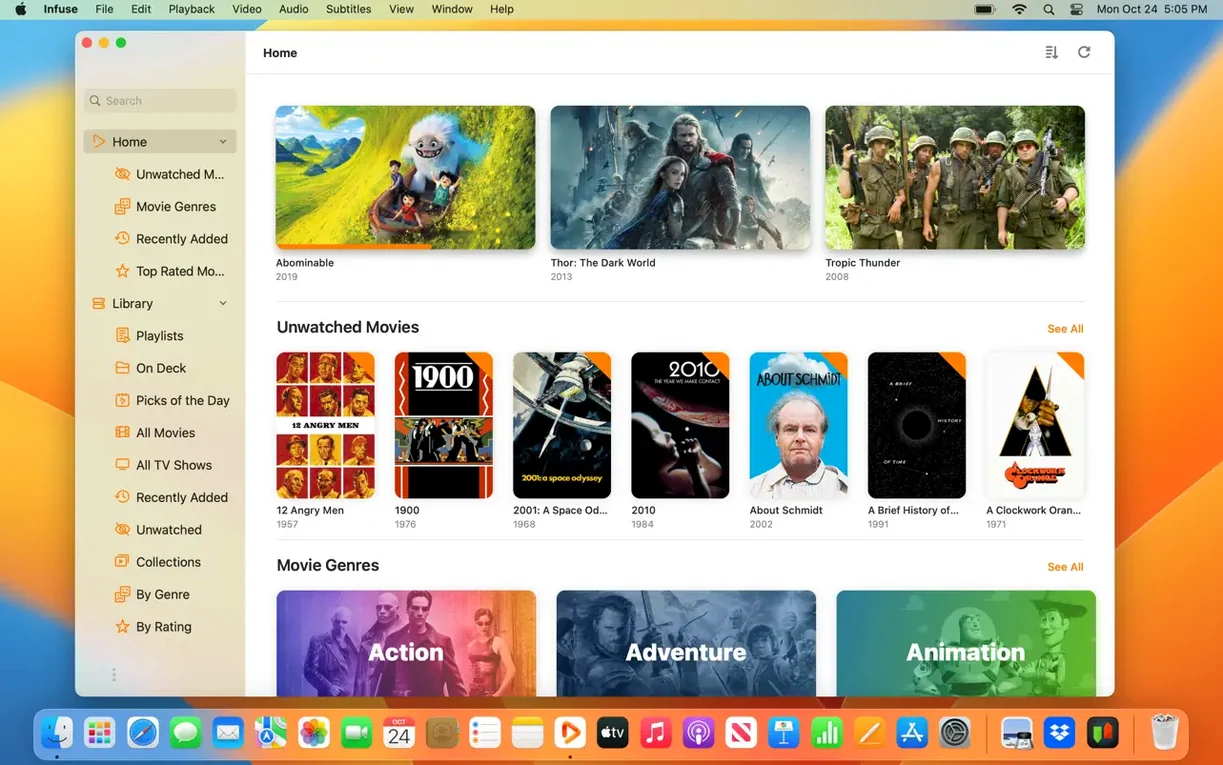
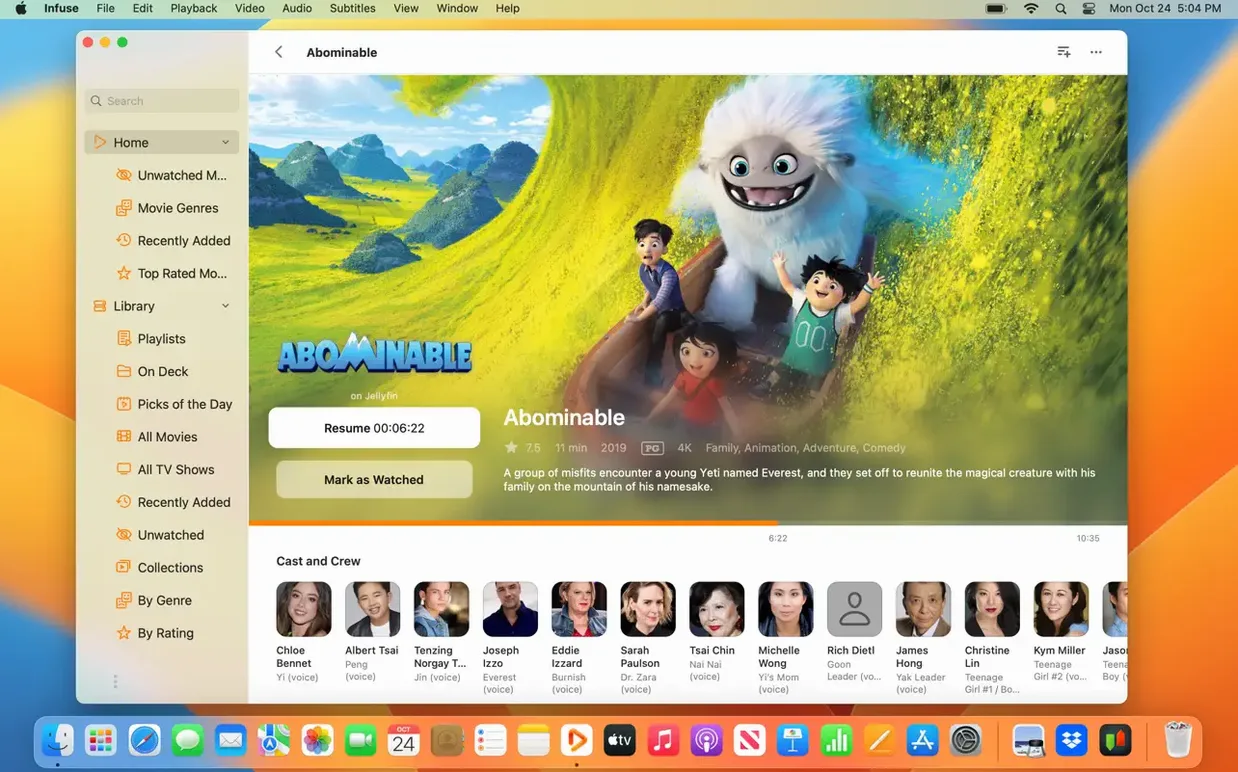
Instead of copying everything to your Mac, Infuse plays files straight from network storage. It talks to SMB, NFS, FTP and WebDAV shares, so a NAS or another computer on your network works as a library. Trakt sync keeps your watch history and ratings in step across devices, and subtitles can be loaded from OpenSubtitles or added on the fly.
What about the interface and setup
The app is localised in over thirty languages, including English, Swedish, German, Spanish, French and Japanese. After the infuse download mac, you open the disk image, drag the app into Applications, and launch it from Launchpad.
For video libraries spread across a NAS and your Mac
This app is especially useful for anyone who keeps a video library spread across several locations. If you have a NAS on the home network and still download files to your Mac's internal drive, Infuse ties both together without asking you to move anything. People who watch TV series and films in mixed formats — some MKV, some MP4, the odd ISO — benefit from not having to check compatibility before pressing play. The same goes for anyone who switches between a Mac, an iPad and an Apple TV during the week; the Pro version's iCloud sync keeps watched status and playback position current across all of them. For photographers and editors who archive raw video alongside their photo projects, Infuse is a straightforward way to preview clips without importing them into a media library first.
Pulls ahead of VLC with browsable metadata and network sources
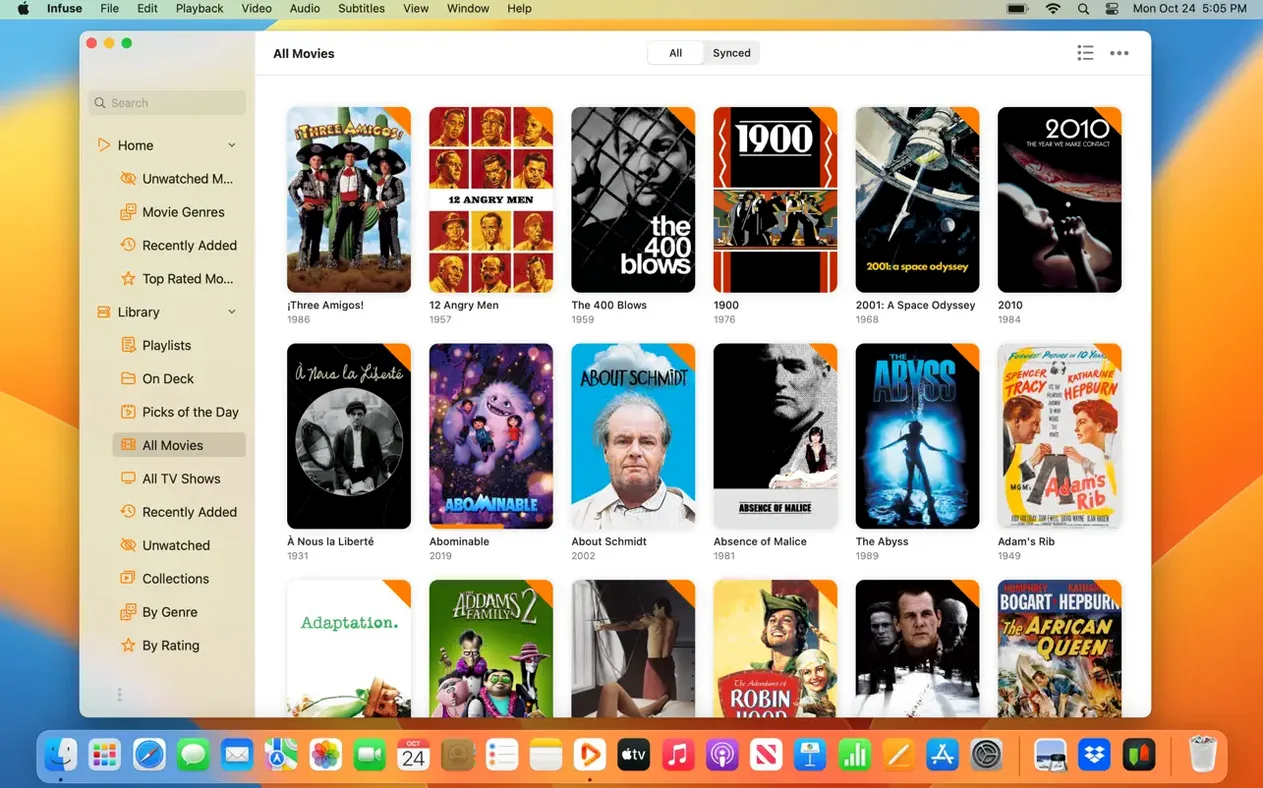
VLC is the obvious alternative, and it plays almost everything Infuse does. Where Infuse pulls ahead is in how it handles network sources and metadata. VLC opens a file over SMB, but it doesn't build a browsable library with artwork and episode groupings. IINA is another strong player for macOS — it looks more native and handles YouTube links well — but it also depends on local files or simple network mounts and lacks Trakt sync or iCloud continuity. Plex is a full media server solution, which requires a server app running somewhere and a bit of setup. Infuse sits between these: it needs no server, scans your existing folders, and gives you a library view that feels closer to Plex than to a plain file list. If you already have Plex, Emby or Jellyfin running, Infuse can connect to those servers too, so you are not locked into one approach.
Wednesday evening: watching episodes from the NAS and a film from the desktop
Wednesday evening, and I have a few episodes of a series saved on the living room NAS and a film downloaded earlier on the Mac's desktop. I open Infuse and the library shows the NAS share I added last week — folders arranged by show, with cover art pulled in automatically. I tap the next episode, and it starts playing within a couple of seconds. Partway through, I realise I need the English subtitles for one scene; I swipe down, pick OpenSubtitles from the list, and the right track appears without leaving the player. After the episode finishes, I switch to the film on the desktop. Infuse picks it up from the local folder I added, and the playback position syncs to my iPad later when I open the app there. No files were moved, no server was restarted, and nothing needed converting.
Point Infuse at one small folder first to see how it scans and organises
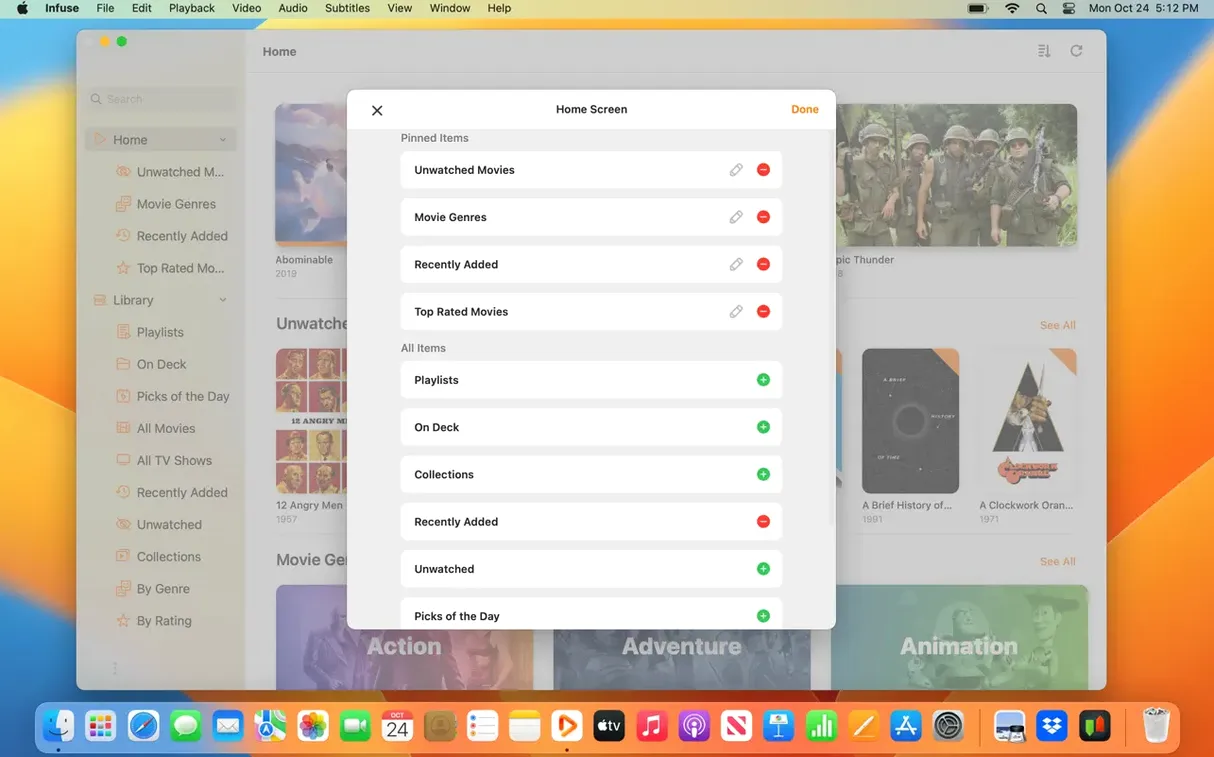
Start by pointing Infuse at one folder — a small one, perhaps a few films or episodes — so you see how it scans and organises before adding the whole library. The app will ask for permission to access network volumes the first time you connect to a share; grant it and the share stays in the sidebar. If you use Trakt, link your account early so watched status syncs from the first play. For subtitles, set your preferred language in the settings once, and Infuse will remember it for future files. I also recommend turning on iCloud sync in the Pro settings if you have other Apple devices; it makes the library feel continuous without any extra work. Finally, if you have files in a format that seems unsupported, let Infuse try anyway — the app handles many containers and codecs that aren't listed in its main feature set.
New this release
- Version 8.5.5 released on September 16, 2026
- Release notes cover Infuse 8.5.5 for iOS and iPadOS
Mac it needs
- macOS 12 or later
- Apple Silicon or Intel processor
Questions I actually get
Does Infuse Pro play files from a NAS?
Yes, Infuse connects to Mac, PC and NAS storage over SMB, NFS, FTP and WebDAV, so you can stream video without copying files to your Mac first.
Can I use subtitles with Infuse Pro?
Infuse supports loading subtitles from OpenSubtitles and lets you add subtitle files on the fly during playback.
Installing on a Mac
- Open the downloaded disk image.
- Drag the app into the Applications folder shortcut.
- Launch the app from Launchpad after copying finishes.
Notes from photographers
Sign in or create your account to leave a comment.
No notes from photographers yet. If you have used this on a real folder, say which camera and which Mac.
