
 Get it for my Mac (2.7 GB)

 Kontakt
8.14.0
- Version
- 3.1.6
- Developer
- KORG
- Interface in
- English
- Licence on file
- K'ed by TEAM HCiSO
- macOS it runs on
- macOS 12 or later
In the edit
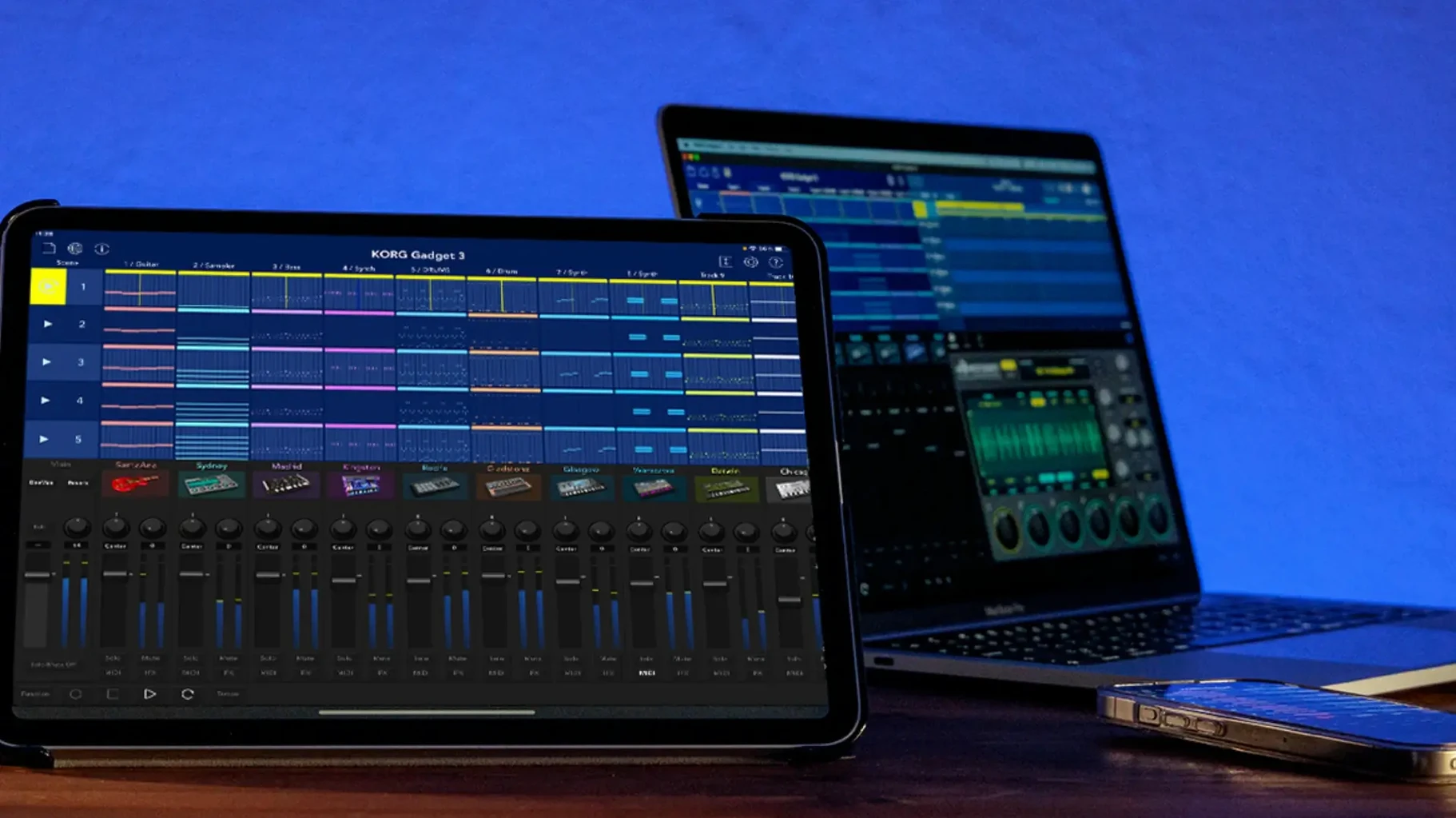
Version 3.1.6 of KORG Gadget adds the OSAKA gadget, plus KORG Module sound libraries OASYS Piano and Timberveil Chord for the Salzburg gadget, and the Space Western, Future Synths and Shoulder Pads sound packs for Fairbanks. Several bugs are fixed and stability improved.
How does Gadget sit alongside the rest of a Mac music setup?
Gadget runs as both a standalone app and a plug-in suite, so it can slot into Logic Pro, Ableton Live or any AU-compatible DAW. If you already use a MIDI controller, the KORG Native Mode support means things like the nanoKey Studio or nanoKONTROL Studio connect wirelessly for input and mixing, and a KORG Keystage will show program and parameter names automatically.
What are the key gadgets in version 3.1.6?
The new OSAKA gadget joins the existing library, which includes Sydney (a loop sampling machine) and Santa Ana (a rhythm guitar machine). Five insert effects were added in the Gadget 3 update, and the Mac version includes all functions and plug-ins from the start.
Genre select system speeds up sound browsing
The jump to Gadget 3 brought a few workflow changes that you feel the moment you start a new project. The genre select system makes it quicker to find sounds without scrolling through every instrument. If you work with a lot of track templates or tend to build from a specific palette, that alone shaves time off the early part of a session.
The Gadget Browser, IFX page and Play page all got interface updates in version 3. The browser is the main place you pick instruments, so a cleaner layout there means less clicking around. The IFX page handles insert effects, and the Play page is where you perform or tweak parts, so both feel more direct now.
For plug-in users, the addition of VST3 and AUv3 support in Gadget 3 is the practical change. If your DAW prefers one format over the other, you can use the one that fits without bridging or workarounds. That makes a difference when you are loading multiple instances in a mix.
Film scorer builds a lo-fi western feel fast
A producer who scores short films and commercials works with tight deadlines. They keep a project template in Logic Pro with a few Gadget instances already loaded. For a brief asking for a lo-fi western feel, they open the Fairbanks gadget and find the Space Western sound pack added in version 3.1.6. The genre select system helps them skip past the synth-heavy options and land on something that fits the scene. They record a quick part using a nanoKey Studio connected wirelessly, then add the OASYS Piano from the Salzburg gadget for a contrasting section. The whole thing takes under an hour, and they never open another plug-in.
Starting a rhythm section in standalone mode
You start Gadget in standalone mode. The first thing you do is pick a tempo and time signature. From the Gadget Browser, you choose a drum machine gadget and a bass synth gadget to build a rhythm section. You play in a pattern using the on-screen pads or a connected controller.
Once the basic loop is running, you open the IFX page and add one of the five insert effects to the drum track. A little compression or a filter sweep changes the feel without needing to switch gadgets.
Next, you add the Sydney loop sampling machine and load a short audio clip from your library. You slice it and let it run alongside the drums. If you want a live instrument feel, the Santa Ana rhythm guitar machine can play chord patterns that follow the MIDI input.
With the arrangement taking shape, you switch to the Play page to record automation. The updated interface makes it easy to see which parameters are moving. You record a few passes, tweak the mix levels using a nanoKONTROL Studio if you have one, and then export the whole thing as a stereo file or save it as a Gadget project to open later inside a DAW.
Yes. The requirements are macOS 12 or later, and the app runs natively on both Intel and Apple Silicon architectures. The interface is in English.
Mac it needs
- macOS 12 or later
- Intel or Apple Silicon
- Interface language: English
Installing on a Mac
- Mount the downloaded disk image.
- Run the standard installer and follow the prompts.
Notes from photographers
Sign in or create your account to leave a comment.
No notes from photographers yet. If you have used this on a real folder, say which camera and which Mac.
