
 Get it for my Mac (7 MB)



 DaisyDisk
4.34.2

- Version
- 1.0.2
- Developer
- Apptorium
- Interface in
- English, Polish
- Licence on file
- K'ed by TNT team
- macOS it runs on
- macOS 13.3 or later
- Chip support
- Apple Silicon, Intel 64-bit
In the edit
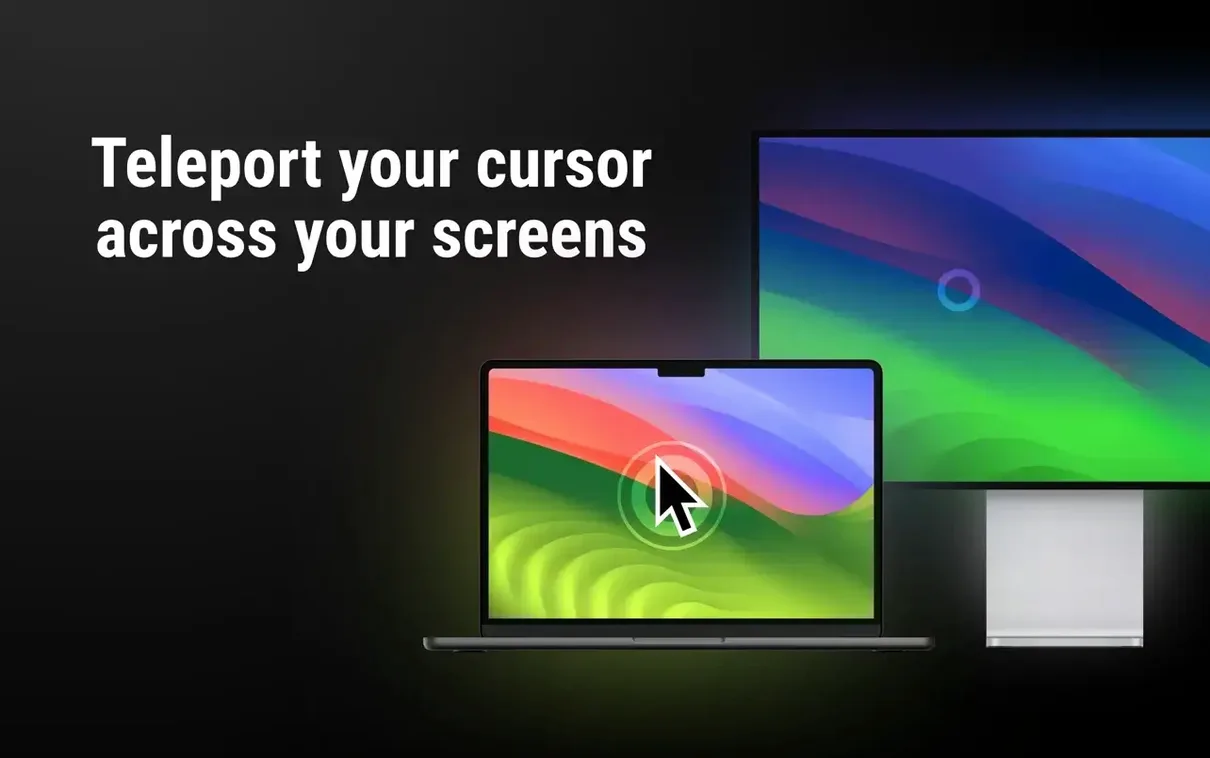
You are editing a batch of portraits across two monitors, and your cursor keeps getting lost in the gap between them. Cursor Teleporter 1.0.2 for Mac solves that with automatic cursor movement between displays and saved screen positions. For the working photographer who juggles multiple windows, it means less time hunting for the pointer and more time editing.
| Detail | Info |
|---|---|
| Version | 1.0.2 |
| macOS | 13.3 or later |
| Architecture | Apple Silicon + Intel 64-bit |
| Languages | English, Polish |
Beyond basic cursor teleportation, the app offers a URL-based API for triggering actions from other software — handy if you want to jump to a specific point when a script finishes exporting. The Teleport helper app lets you bind cursor moves to mouse software or launchers, so you can keep your hands on the controls. Custom teleportation animation is there too, for those who want a visual cue instead of an instant jump. It is a small utility that understands how a power user works across screens.
If the cursor doesn't move, check Accessibility permissions
Cursor Teleporter is straightforward, but a couple of things tend to trip people up on first run. If the cursor doesn't move when you press your shortcut, check that the app has Accessibility permissions in System Settings. macOS can be fussy about letting utilities control the pointer, and Cursor Teleporter needs that permission to do its job. Head to Privacy and Security, find Accessibility in the list, and make sure the app is ticked.
Another one I hear about: the automatic mode feels like it isn't working on a single monitor. That is by design — auto mode is built for multiple displays, moving the cursor between them. If you only have one screen, use manual mode instead. Save a spot on the display and jump back to it whenever you need.
The Teleport helper app not appearing in your menu bar can also cause confusion. It runs as a separate process, so check your menu bar area after launching Cursor Teleporter. If it is missing, relaunch the main app. The helper should follow.
Map shortcuts to keys that don't clash with your existing ones
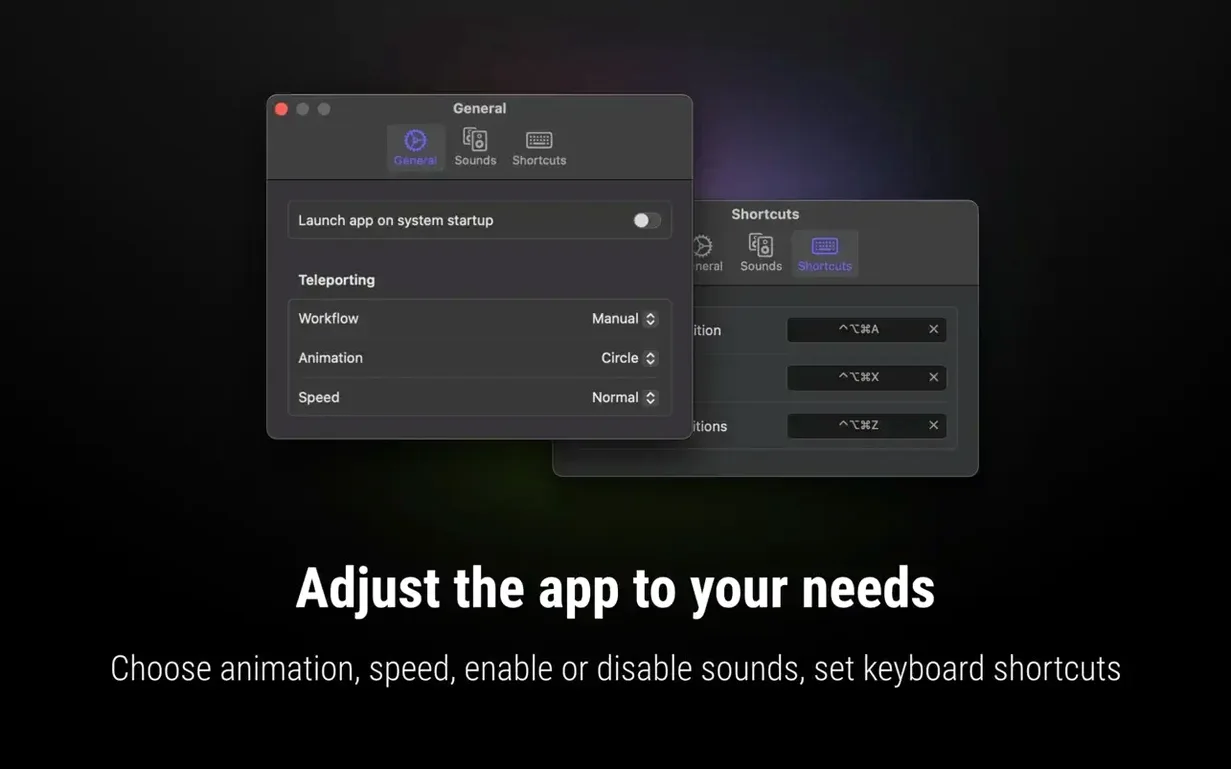
Before you start using Cursor Teleporter in earnest, there are a few settings to tweak that make the biggest difference. The keyboard shortcuts come with defaults, but you will want to map them to keys that don't clash with your editing software. I set mine to combinations I never use in Lightroom or Capture One — something with Control or Option that stays out of the way.
The teleportation animation is another one. If you prefer an instant jump with no visual feedback, turn the animation off entirely. If you like knowing where the cursor landed, keep a short animation on. It is a small thing, but it changes how the tool feels in daily use.
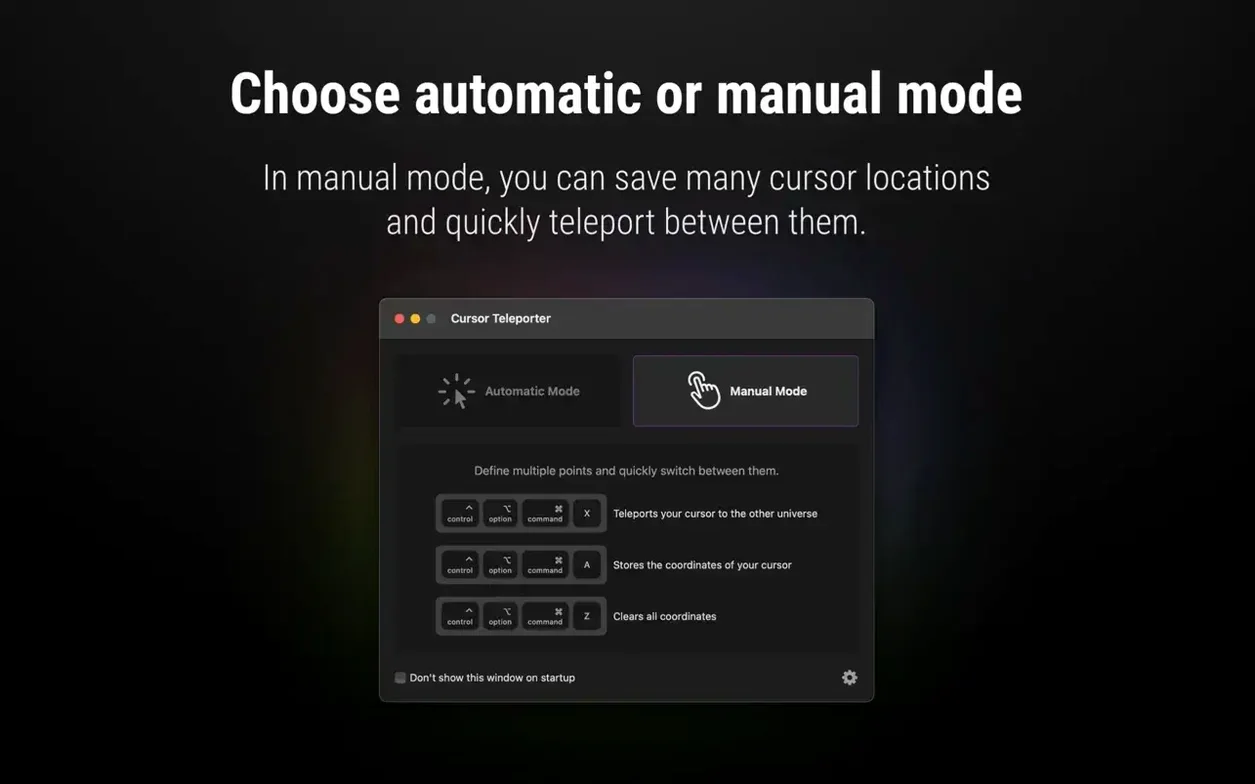
Manual mode points are worth setting up early too. Save a few common positions — your main editing window, the export panel, the preview monitor. Once they are saved, you can cycle through them without lifting your hands from the keyboard. That initial setup takes two minutes and saves a lot of faff later.
Culling a wedding gallery with two monitors and no mouse flinging
It is a Tuesday afternoon and I have a wedding gallery to cull. Two monitors: the left one holds the photo browser, the right one has the main editing window. Normally I would be flinging the mouse across the desk every few seconds, but today I have Cursor Teleporter running.
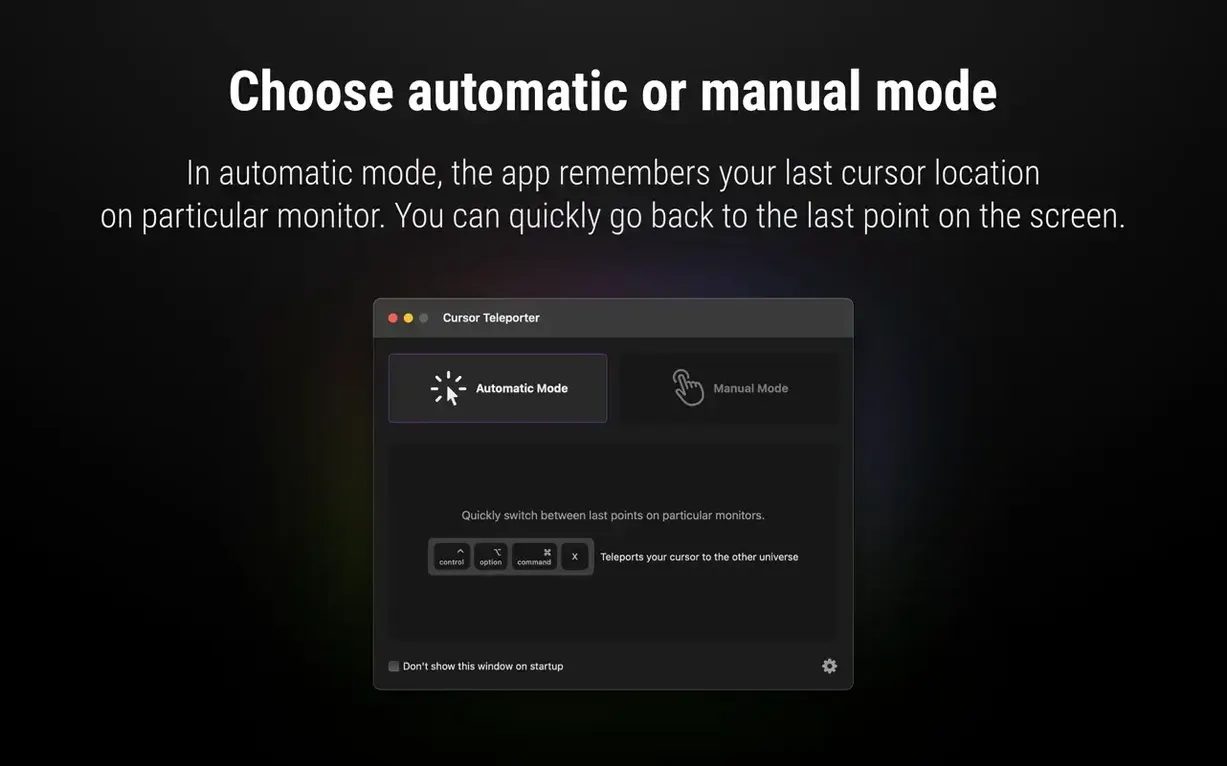
I start by culling selects on the left screen. Every time I flag a photo, I hit my manual mode shortcut to jump the cursor to the next thumbnail. No dragging, no aiming — just a key press and the pointer is where I need it. When I am ready to edit, I press the auto-mode shortcut and the cursor moves to the right display, landing exactly where I left it last time.
Halfway through editing, I realise I need to check a reference image on the left screen. One shortcut, cursor back. The Teleport helper app sits quietly in the menu bar the whole time, waiting for a trigger from my mouse software if I want it. I do not use it much during editing, but when I switch to a launcher like Alfred or Raycast, the URL commands come into play. I have a saved point for the export folder, and I can trigger it from a script after a batch export finishes.
By the end of the session, I have not touched the mouse to reposition the cursor once. It is a small shift in how you work, but over a full day of editing, it adds up to genuine time saved.
Workflow: editing a batch of portraits with manual and auto modes
Here is a concrete workflow that uses both modes together. Open Cursor Teleporter and set up two manual points: one on the left screen at the top of your photo grid, one on the right screen at the centre of your editing canvas. Turn auto mode on for moving between displays.
- Start on the left screen. Select the first portrait in your grid.
- Press the auto-mode shortcut to move the cursor to the right screen. It remembers where you last left it on that display, so it goes straight to the editing canvas.
- Make your edits. When done, press the manual-mode shortcut for the left screen — the one you saved at the top of the grid. The cursor jumps back to the next row of thumbnails.
- Select the next portrait and repeat.
This keeps your hands on the keyboard and your focus on the images. The manual points handle the vertical movement within each screen, while auto mode handles the horizontal switch between monitors. It takes a few rounds to become automatic, but once it does, the workflow feels natural. You can adapt the same approach for any two-screen task — comparing before and afters, dragging layers between panels, or checking proofs against a client brief.
Mac it needs
- macOS 13.3 or later
- Apple Silicon or Intel 64-bit
Questions I actually get
Can I trigger cursor moves from other apps?
Yes, Cursor Teleporter supports URL commands for saving points, changing screens, and highlighting the cursor, plus a helper app called Teleport for use with mouse software or launchers.
Does it work on both Intel and Apple Silicon Macs?
Yes, it supports both Apple Silicon and Intel 64-bit Macs, as long as you are running macOS 13.3 or later.
Installing on a Mac
- Mount the disk image.
- Run Open Gatekeeper friendly.
- Press Enter in Terminal to bypass Gatekeeper.
- Drag the app to the Applications folder.
- Open the app to start using it.
Notes from photographers
Sign in or create your account to leave a comment.
No notes from photographers yet. If you have used this on a real folder, say which camera and which Mac.
