
 Get it for my Mac (2.2 GB)







 Resident Evil Village
1.1.2
- Version
- 1.01
- Developer
- Sandstorm Studios
- Interface in
- English
- Licence on file
- Not required
- Chip support
- Apple Silicon, Intel 64-bit
- Edited with it on
- macOS Tahoe, Mac mini 2024 M4
- Out on
- 14.01.2023
- Voices in
- Music only
In the edit
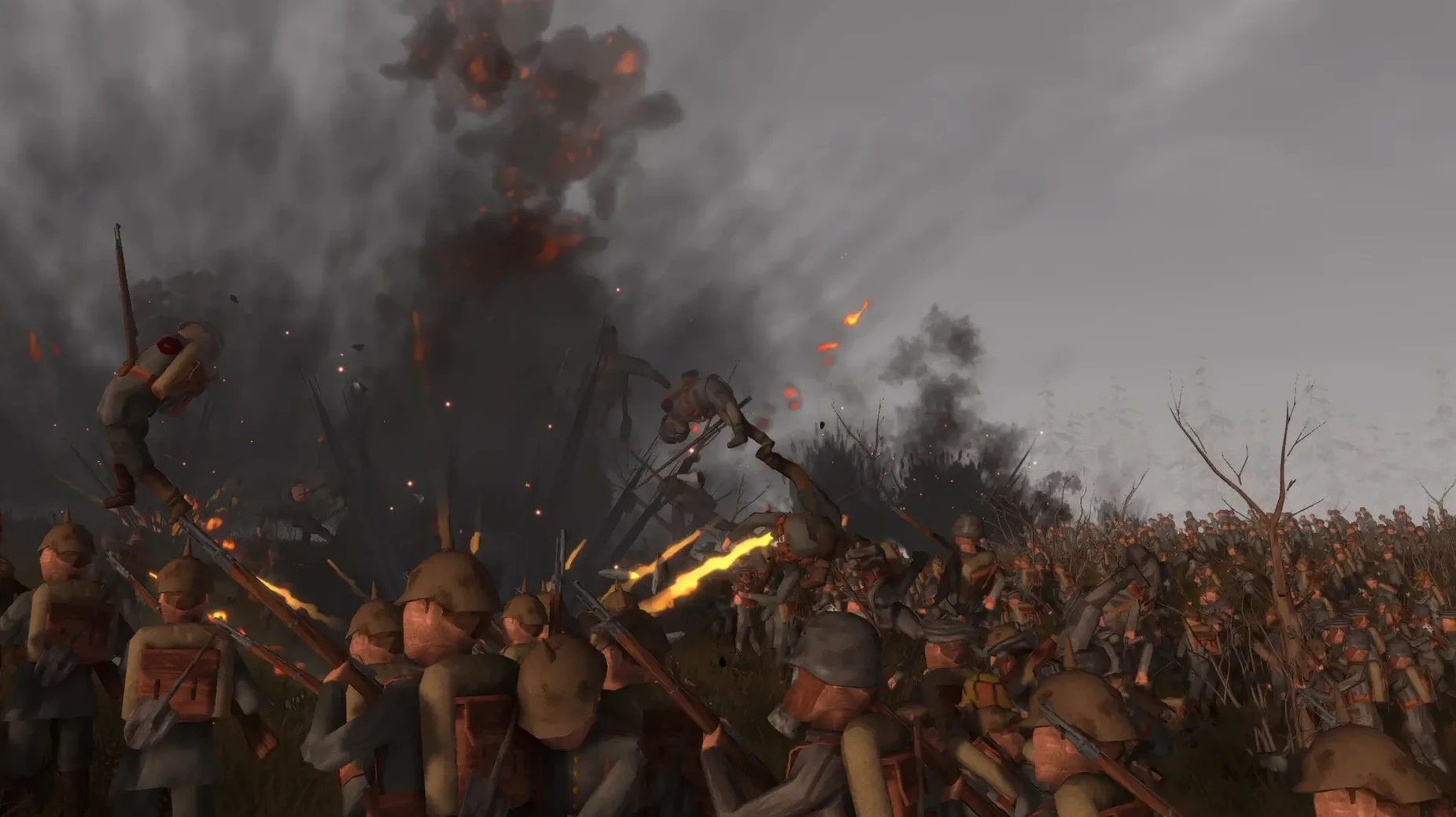
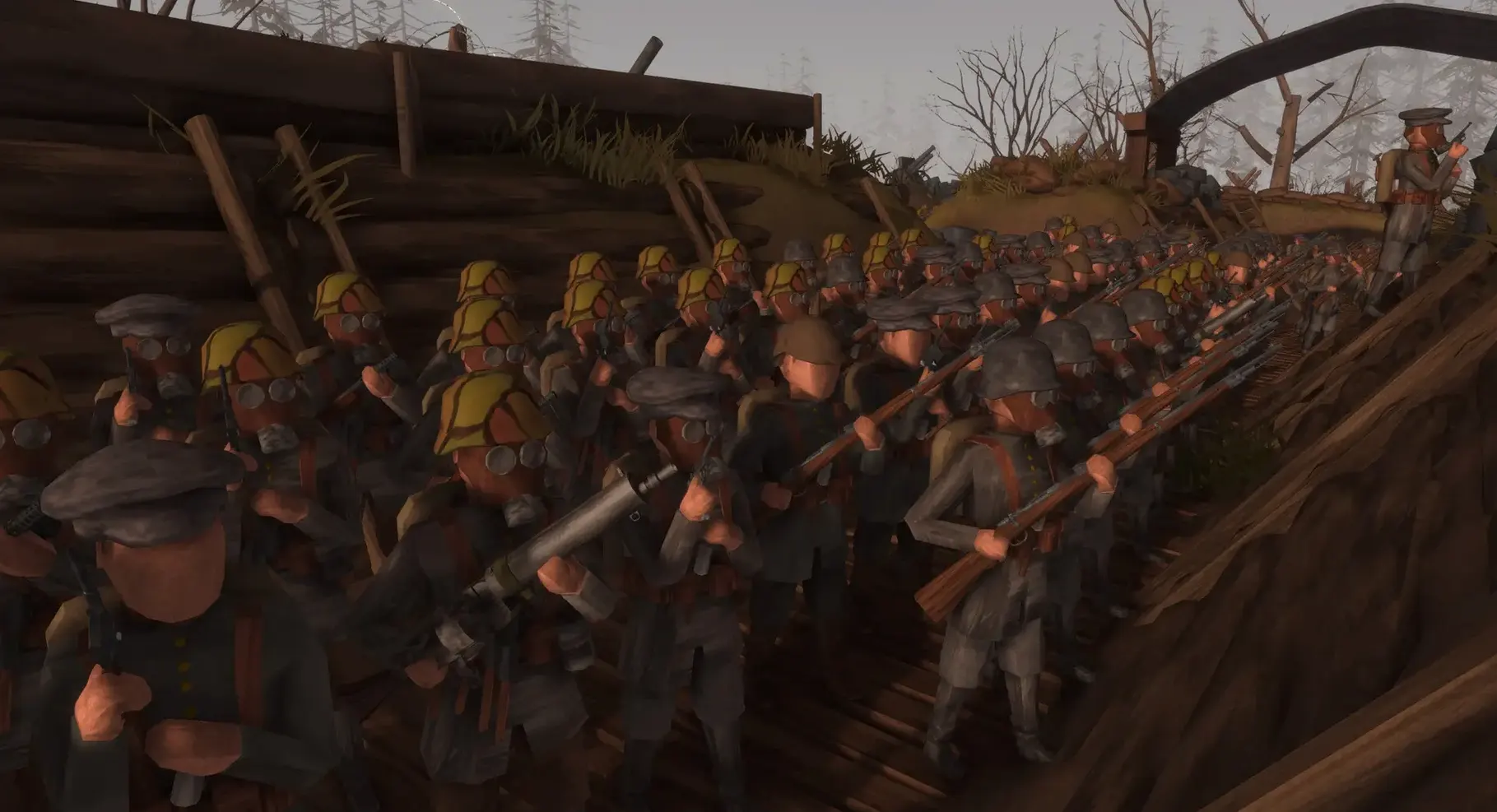
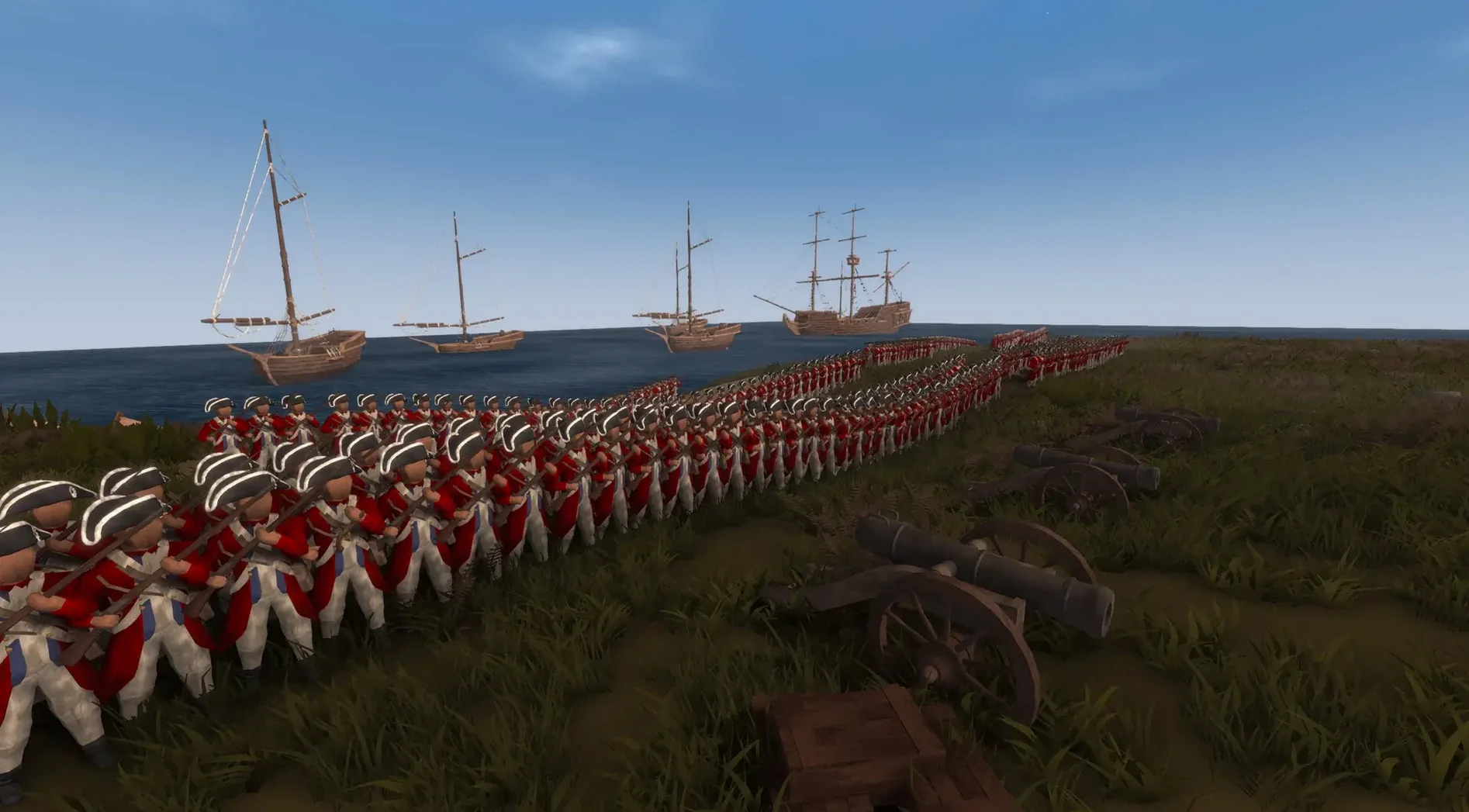
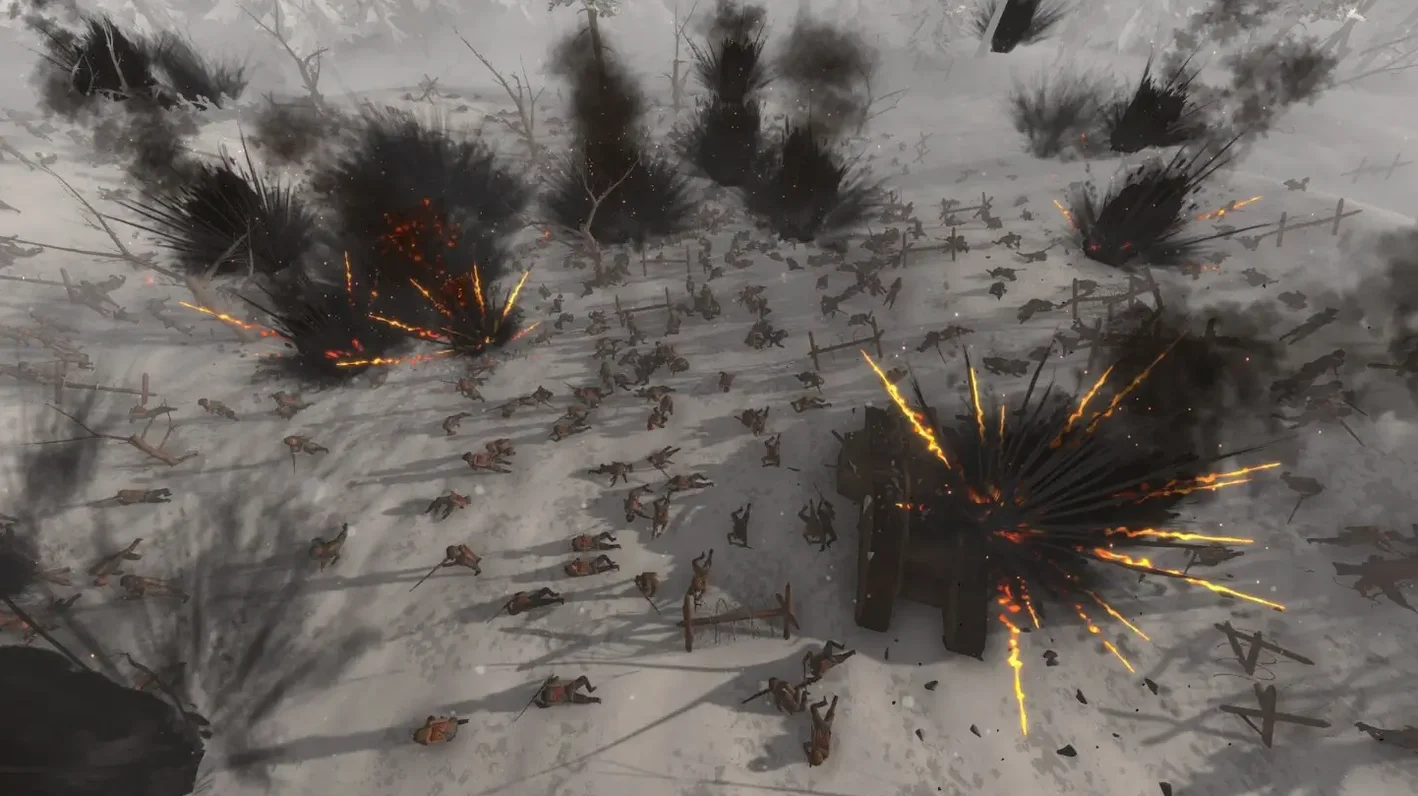
The trouble with most war games is that they ask you to pick a lane. You either run and gun in first person, or you hover above the map as a general. Rising Front for Mac drops that divide and tells you to do both, often in the same push. It is a World War I battle simulator that mixes FPS shooting, RTS unit command, and a building system into one muddy, chaotic session.
Fighting in first person and commanding squads from above
- You fight in first person with period rifles and artillery, watching ragdoll physics send soldiers flying.
- You switch to a command view to direct AI squads, move them into cover, and time their advance.
- You build trenches, bunkers, and defensive lines while the enemy shells your position.
- You call in artillery strikes and coordinate pushes across the map.
Best for players who want to lead squads and build trenches
This one lands best if you have ever wanted to lead a squad while also digging the trench they fight from. The workshop content focus means custom maps and scenarios keep things fresh after the built-in battles run dry. It runs on both ARM and x86 Macs, so the M4 Mini or an older Intel machine will handle it.
Turning off motion blur before your first big battle
Out of the box, Rising Front picks sensible defaults, but a few tweaks save you time once the shells start falling. Head into the options before your first big battle.
- Turn off motion blur if you plan to switch between FPS and command view often. The blur adds atmosphere in a trench but makes reading the battlefield harder when you pull out to direct squads.
- Set the camera sensitivity higher than you think you need. You will be flicking between your soldier and the overhead view constantly, and a slow pan costs you a push.
- Enable the procedural cover overlay if it is not on already. It highlights which bits of terrain actually stop bullets, and that information matters more than the graphics preset you pick.
- Rebind the squad command keys early. The defaults work, but moving them closer to your movement hand makes calling artillery while running much less fiddly.
A real afternoon with Rising Front
A friend of mine runs a small WWI reenactment group in Kent, and he picked up Rising Front for the off-season. He is the kind of player who cares about unit spacing and line of sight more than kill counts. His first proper session went like this: he spawned his force, spent ten minutes in the building system digging a shallow trench network, then switched to first person to sight an enemy machine gun nest. He marked it on the map, pulled back to command view, and ordered three squads to flank while he laid down covering fire with a rifle. The ragdoll physics kicked in when his left squad caught a shell, and he had to rebuild that trench section before the next wave. He lost the battle but spent the next hour recreating the same scenario in the workshop editor to try a different approach. That is the loop the game sells you.
Dig before you shoot to hold ground longer
Rising Front does not handhold much, so the first few hours can feel like getting pushed back to your second line of trenches. These habits help you hold ground longer.
- Dig before you shoot. The building system is not optional. A shallow trench with sandbags changes a rifle duel from a death sentence to a fair fight. Get comfortable placing basic cover before you worry about bunkers.
- Use the AI unit command to hold fire. Your squads will engage everything they see by default, which wastes ammo and gives away positions. Tell them to hold until you give the order, especially when you are scouting in first person.
- Watch the replay of a lost battle. The game records enough data to show you where the breakthrough happened. Nine times out of ten, it was a gap in your trench line that you did not notice because you were shooting.
- Visit the workshop before you play the campaign. Custom maps made by other players often include notes on which tactics work, and trying those first teaches you the systems faster than the built-in scenarios do.
- Save often between pushes. The game lets you build and command in real time, and one stray artillery round can undo ten minutes of digging if you have not checkpointed.
New this release
- Bug fixes and small changes.
Mac it needs
- macOS version not specified by the developer.
- Architecture: both Intel and Apple Silicon.
Questions I actually get
Does Rising Front support custom content?
Yes, it has a workshop content focus, so you can find and share custom maps and scenarios through the Steam Workshop.
Installing on a Mac
- Open the downloaded disk image.
- Drag the app into the Applications folder alias.
- After copying finishes, open the app from Launchpad.
Notes from photographers
Sign in or create your account to leave a comment.
No notes from photographers yet. If you have used this on a real folder, say which camera and which Mac.
